Key Takeaways
- Flight Time Extension: Replacing heavy aluminum brackets with topology-optimized SLS nylon can increase battery life and flight time.
- Part Consolidation: Print complex airframes as a single piece, eliminating screws, glue, and assembly weight.
- Impact Resistance: Nylon PA12 and PA11 offer excellent impact resistance, surviving hard landings better than brittle FDM or SLA parts.
Introduction
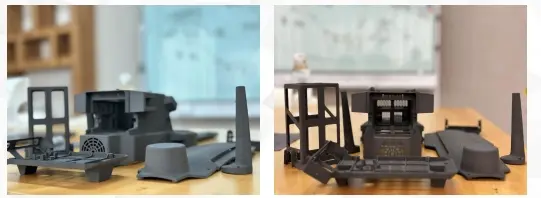
In the world of Unmanned Aerial Vehicles (UAVs) and drones, weight is the ultimate enemy. Every gram saved on the airframe translates directly into longer flight times, heavier payload capacity (for cameras or sensors), and better maneuverability. Selective Laser Sintering (SLS) 3D printing has become the go-to manufacturing method for commercial and industrial drone companies looking to push the boundaries of lightweight design.
The Power of Topology Optimization
Traditional drone frames often rely on carbon fiber tubes connected by CNC-machined aluminum brackets. While carbon fiber is light, the metal brackets and the steel screws required to hold them together add significant weight. By utilizing SLS 3D printing and topology optimization software, engineers can design organic, bone-like brackets that place material only where the stress paths require it. A topology-optimized SLS Nylon PA12 bracket can be up to 50% lighter than its aluminum counterpart while maintaining the exact same structural stiffness.
Part Consolidation
SLS requires no support structures, allowing for extreme geometric complexity. Drone designers leverage this to consolidate multiple parts into a single print.
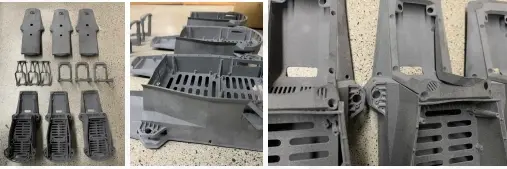
Instead of assembling a motor mount, a landing gear strut, and an antenna housing from five different pieces, they can be designed and printed as one continuous, aerodynamic shell. This not only reduces the Bill of Materials (BOM) but also eliminates the weight of the heavy metal fasteners that would otherwise be needed to join them.
Impact Resistance and Durability
Drones crash. It is an inevitable part of operation, especially in harsh industrial environments like mining inspections or agricultural surveying.
- FDM and SLA parts are often too brittle; they shatter upon impact.
- SLS Nylon (PA12 and PA11) is incredibly tough and possesses high impact resistance. In the event of a hard landing, an SLS printed landing gear will flex and absorb the energy rather than snapping, protecting the expensive electronics and payload inside.
Rapid Aerodynamic Iteration
Aerodynamics play a massive role in drone efficiency. With SLS, engineers can design a new propeller shroud or aerodynamic canopy, print it overnight, and test it in a wind tunnel the next day. This rapid iteration cycle allows companies to optimize their designs months faster than waiting for injection molding tooling.
Conclusion
For the drone industry, SLS 3D printing is not just a prototyping tool; it is a core production technology. By enabling extreme lightweighting, part consolidation, and impact-resistant structures, SLS helps UAV manufacturers build drones that fly longer, carry more, and survive the toughest environments.
For a UAV project, review our SLS 3D printing and prototyping services and send the CAD files, target mass, loads, quantity, inspection criteria, finish, and delivery destination for an engineering assessment.
Related Case Studies
See how we have delivered results in similar projects
 Aerospace
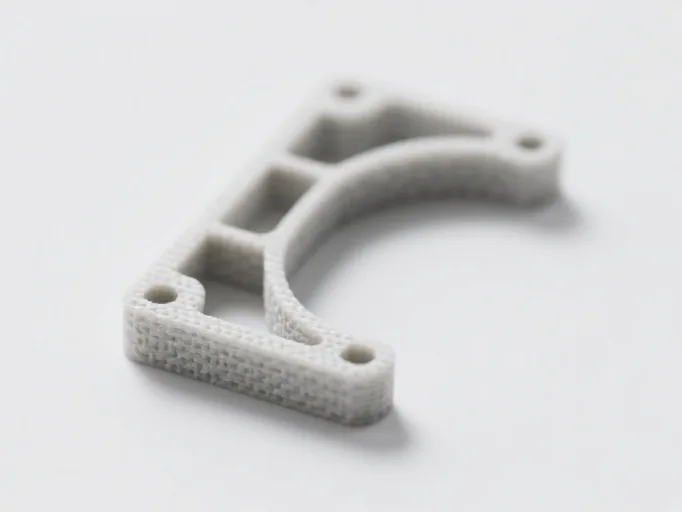
Aerospace Bracket Components
Lightweight structural brackets for aerospace applications meeting strict weight and strength requirements.
 Aerospace
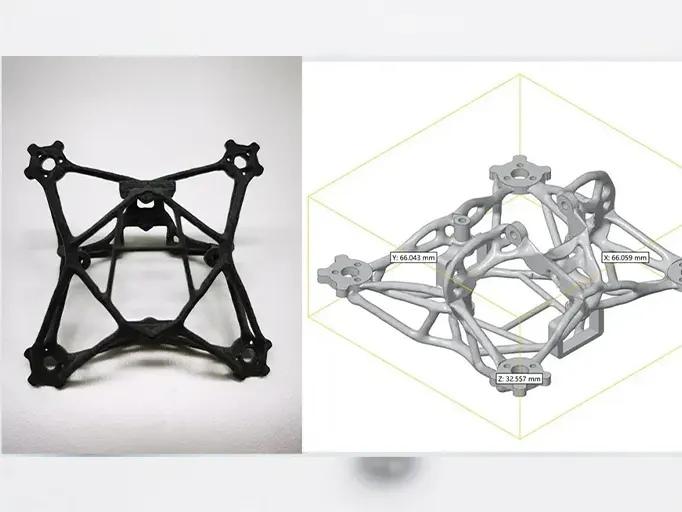
Drone Structural Parts
Lightweight drone frames and structural components optimized for maximum performance.
 Medical
Spinal Orthosis Solution
Custom 3D printed spinal braces providing personalized solutions for scoliosis patients.