What biological evaluation data is available for Precimid 1190Pro?
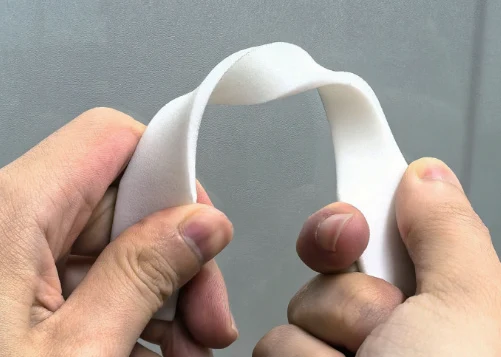
The tested configuration was Precimid 1190Pro with chemical vapor smoothing, batch 20250810. Reports cover ISO 10993-5:2009 cytotoxicity (72.6% cell viability for the 100% extract; no potential cytotoxicity under the study conditions), ISO 10993-23:2021 skin irritation (PII 0, Negligible), and ISO 10993-10:2021 skin sensitization (0% positive rate in the test groups). Results apply only to the tested articles and study conditions.
Do these test results cover painted parts or every color and finish?
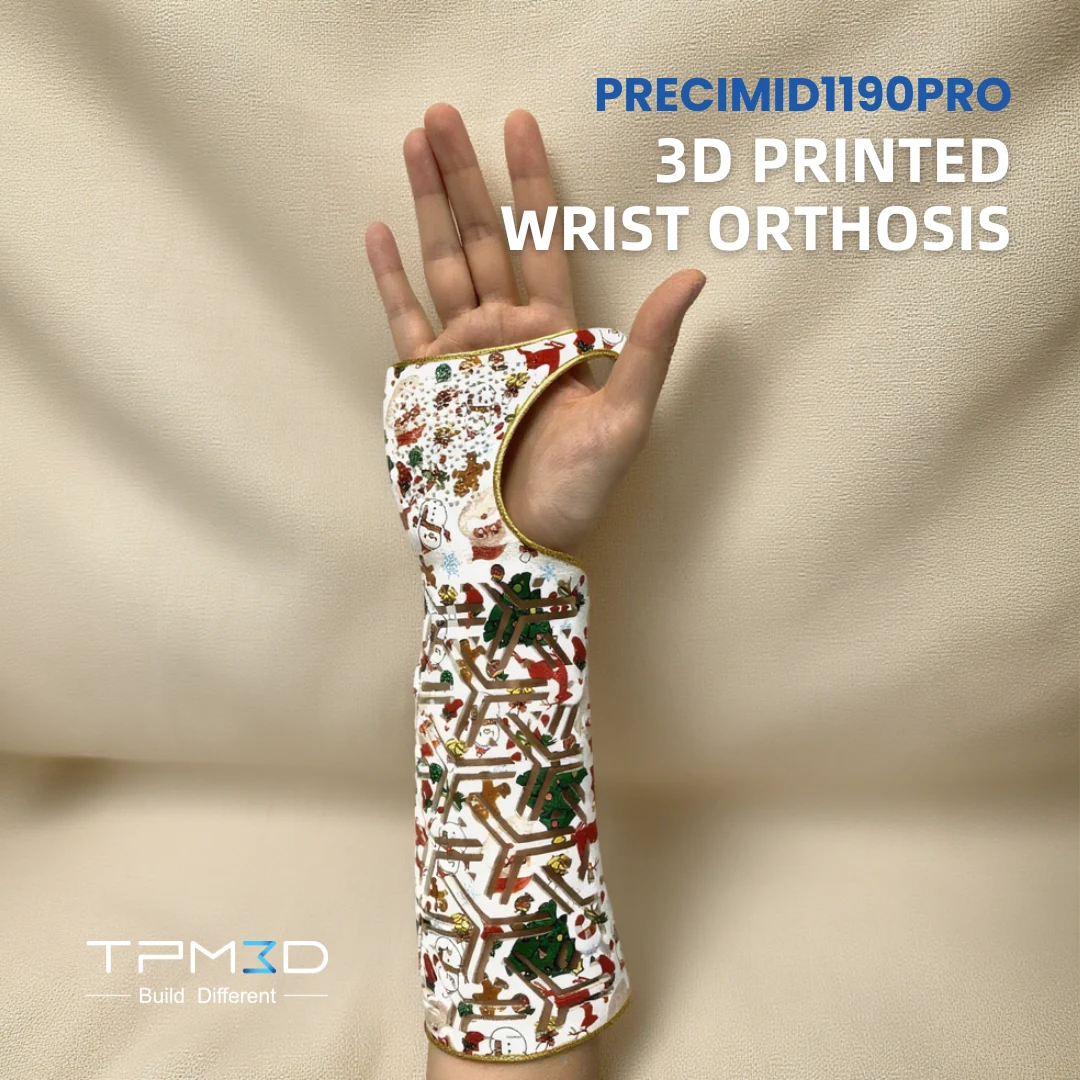
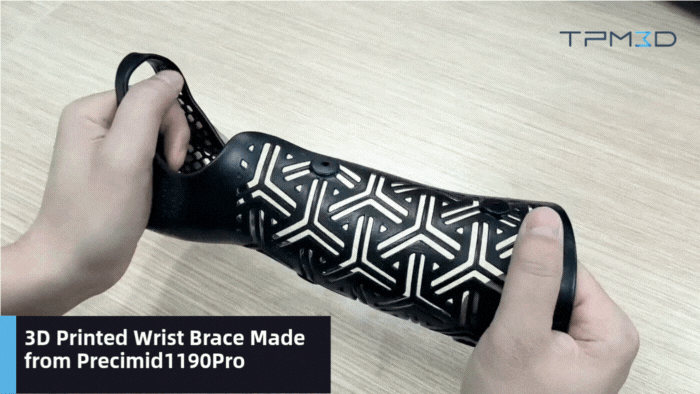
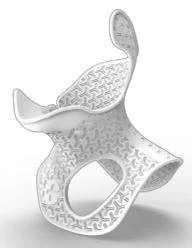
No automatic equivalence is established. The reports identify Precimid 1190Pro with chemical vapor smoothing. Raw parts, other colors, dyes, coatings, sterilization and different processing conditions require a separate assessment. Application gallery images illustrate designs and are not evidence that every illustrated finish was tested.
Do these reports certify a final product for long-term skin contact?
No. These are three biological evaluation test reports, not a final-device certification or a guarantee for every contact duration. Review the intended contact site, type and duration, final manufacturing process, cleaning or sterilization, and application-specific validation with our team.
How should engineers choose between PA12, PA11, and glass-filled PA12?
Start with the part requirements rather than the material-family name. Compare the exact current grades for loading, ductility, stiffness, temperature, chemicals, moisture, finish, orientation, inspection, and service life. Use the relevant TDS to shortlist a grade, then define printed-part validation for critical requirements.
Is PA11 always better than PA12 for impact or flexible features?
No. PA11 is often shortlisted when ductility, impact behavior, or repeated flexing matters, but suitability depends on the exact grade, geometry, orientation, conditioning, load case, and validation method. PA12 may still be suitable for a specific design, so compare documented grade data and printed-part evidence.
When should glass-filled PA12 be considered?
Consider glass-filled PA12 when added stiffness or dimensional behavior may benefit the design. Also review tradeoffs involving surface texture, thin features, fasteners, impact behavior, temperature, orientation, and finishing. The exact grade and acceptance criteria should be confirmed before quoting.
Can nominal TDS values be used as guaranteed printed-part properties?
Not automatically. TDS values may describe a particular material, specimen, orientation, conditioning state, and test method. A production requirement should identify the exact grade and decide whether supplier data is sufficient or whether representative printed parts need project-specific testing.
Can SLS nylon parts be dyed, painted, or smoothed?
These finishes may be available for selected nylon grades, but compatibility depends on material, geometry, color, surface target, quantity, dimensions, and service environment. Include the finish and acceptance criteria in the RFQ so the complete process can be reviewed.
What information is needed for an SLS material recommendation?
Provide CAD, quantity, load case, flexibility or stiffness target, temperature, chemicals, moisture or UV exposure, critical dimensions, finish, color, inspection needs, service-life expectations, shipping destination, and delivery target. Identify which requirements must be verified by documentation or testing.
What must be verified for a flexible SLS material?
Confirm the exact powder grade and current process availability, then define the hardness or stiffness method, load and deformation, cycle count, temperature, chemicals, abrasion, moisture or UV exposure, finish, skin-contact or regulatory needs, and acceptance criteria. Family labels such as TPU, TPA, or Co-PA do not guarantee equivalent printed-part behavior.