SLS manufacturing services

SLS 3D Printing & Prototyping Services

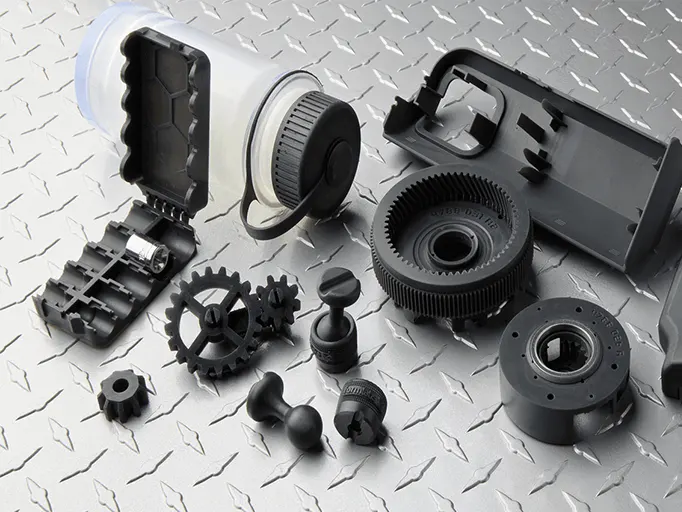
TPM3D provides SLS prototyping services for functional nylon prototypes and low-volume production parts. Our workflow covers CAD and DFM review, material selection, SLS printing, post-processing, inspection, and global delivery, with manufacturability, price, and schedule confirmed for each project.

Compare Materials

Typical RFQ inputs

  • CAD files: STL, STEP, OBJ
  • Material: PA12, PA11, PA12GB
  • Quantity: prototype or batch quantity breaks
  • Finish: raw, dyed, polished, painted
  • Deadline and shipping destination
No tooling cost
DFM review included
Global express delivery
Functional nylon parts

Core services

Choose the right SLS service for your project stage

Each service is built around engineering review, material selection, production control, and delivery.

SLS Rapid Prototyping

01 / Rapid validation

SLS Rapid Prototyping

Design to functional nylon part without tooling

Use SLS prototyping to evaluate fit, function, and complex nylon geometry before committing to molds or production fixtures. Material, orientation, tolerances, finish, and validation requirements are confirmed for each design.

Project review
PA12 / PA11
Tolerance by geometry

Key features

  • DFM feedback included
  • Suitable for fit and function checks
  • No separate support structures
  • Complex internal geometry

Applications

  • Fit and function checks
  • Design validation
  • Investor demos
  • Pre-tooling samples
SLS Small Batch Production

02 / Low-volume manufacturing

SLS Small Batch Production

Low-volume quantities confirmed from the RFQ

Use SLS as a bridge between prototypes and higher-volume production when avoiding dedicated injection tooling is useful. Quantity, inspection criteria, batch consistency requirements, and economics are confirmed before production.

No injection mold
Quantity by RFQ
Project pricing

Key features

  • Batch inspection
  • Part-to-part consistency
  • Material traceability
  • Global shipping support

Applications

  • End-use nylon parts
  • Spare part runs
  • Market test batches
  • Custom product production
Engineering Handboard Models

03 / Presentation parts

Engineering Handboard Models

Display-quality parts for launches, sales, and exhibitions

Combine SLS accuracy with finishing options for models that communicate form, assembly, and product intent clearly to customers and stakeholders.

Display finish
Color options
Assembly ready

Key features

  • Dyeing and painting
  • Surface smoothing
  • Part assembly support
  • Photo and exhibition quality

Applications

  • Trade show displays
  • Customer presentations
  • Product photography
  • Marketing samples

3D Plus post-processing

Turn raw SLS prints into customer-ready parts

Finishing options improve appearance, touch, assembly performance, and buyer confidence.

Dyeing

Uniform black, grey, or custom color for nylon PA12 and PA11 parts.

Vapor smoothing

Improved touch, cleaner appearance, and reduced surface roughness.

Painting

Color-matched coating for visual prototypes and customer-facing models.

Vibration polishing

Mechanical finishing for a more even matte surface.

Threading and inserts

Tapping, metal inserts, and assembly preparation for functional parts.

Bead blasting

Consistent surface texture for raw SLS parts before delivery or dyeing.

Tested material and finishing configuration

Biological evaluation data is available for Precimid 1190Pro with chemical vapor smoothing, covering cytotoxicity, skin irritation and skin sensitization. The results apply to the tested articles and study conditions; they do not establish equivalent results for other materials, colors, coatings or finishing processes.

Precimid 1190Pro biological evaluation results

Measured sample results

SLS part quality, from surface to fit

Review published sample observations, then define the surface, critical dimensions and inspection requirements for your own parts.

Quality defined around your application

Surface: agree on appearance, tactile requirements and finishing.

Fit: identify critical dimensions and mating interfaces.

Function: qualify representative parts under the intended use conditions.

Source: TPM3D P360 sample study, August 3, 2026.

Published dimensional observations

P360 · 0.12 mm layers. Study materials: Precimid1172Pro BLK and Precimid1172Pro GF30 BLK. The source does not assign each measurement to a specific grade.

Reported deviation from CAD nominal for selected P360 sample features
FeatureCAD nominalDeviation
XY feature18.36 mm+0.03 mm
XY feature34.34 mm+0.01 mm
Z feature26.64 mm−0.10 mm
Thin wall0.50 mm+0.02 mm
Thin wall0.66 mm+0.04 mm

These are sample measurements, not a universal production tolerance. Final acceptance depends on geometry, material, orientation, finish and the agreed inspection method.

The report also describes matte surfaces and clean corners on the illustrated samples. Manual bending demonstrations are qualitative observations, not standardized strength data.

Read the full study and project guidance

Project workflow

A quoting process designed for engineering clarity

  1. 1

    Send files

    Upload STL, STEP, OBJ, drawings, or RFQ notes with target quantity and material.

  2. 2

    Engineering review

    We check wall thickness, tolerances, escape holes, finish needs, and cost drivers.

  3. 3

    Confirm quote

    You receive pricing, lead time, material recommendation, and production assumptions.

  4. 4

    Print and finish

    Parts are nested, printed, cooled, cleaned, post-processed, and inspected.

  5. 5

    Ship worldwide

    Packed parts ship globally by express courier with tracking information.

FAQ

Service questions buyers ask before sending files

Content reviewed: 11 September 2026

What do TPM3D SLS prototyping services include?

TPM3D SLS prototyping services cover CAD and DFM review, material selection for PA12, PA11, or project-specific alternatives, SLS printing, cleaning and post-processing, agreed inspection, packing, and delivery. The exact scope, quantity, finish, tolerance checks, and schedule are confirmed from the RFQ before production.

What quantities can be reviewed for SLS production?

TPM3D reviews single-prototype and batch RFQs, but does not apply one universal quantity limit to every design. Practical capacity and pricing depend on part size, nesting, material, inspection, finishing, and schedule. Provide the expected quantity or quantity breaks for a project-specific assessment.

How is SLS production lead time confirmed?

Lead time is confirmed after file review. The schedule depends on file readiness, quantity, material availability, nesting, machine loading, cooling, post-processing, inspection, and destination. Include the required delivery date in the RFQ so production and shipping timing can be checked for that project.

Which file formats are accepted?

TPM3D accepts STEP, STL, OBJ, and common CAD exports. STEP files and dimensioned drawings are useful when assemblies, critical dimensions, tolerances, or inspection criteria matter. Mesh files should be watertight and use clearly stated units.

Can SLS be used for functional end-use parts?

SLS can be suitable for functional nylon parts when the selected grade, geometry, orientation, finish, loading, environment, and validation plan match the application. Suitability is not determined by the process name alone; safety-critical or regulated uses require project-specific engineering evidence and approval.

When is SLS not the best manufacturing process?

SLS may not be the best fit when the required material is unavailable for powder-bed fusion, a mold-grade surface is mandatory without added finishing, critical tolerances exceed the validated process capability, or established high-volume tooling provides better economics. The decision should be made from the actual CAD and requirements.

What post-processing options are available?

Available options can include bead blasting, dyeing, smoothing, polishing, painting, threading, inserts, and assembly preparation. Compatibility depends on the polymer grade, geometry, color, surface target, quantity, and end-use environment. Confirm the required finish and acceptance criteria before quoting.
Start with a file review

Send your SLS project for an engineering-reviewed quote

Include CAD files, material requirements, quantity, finish, and target delivery date.