Key Takeaways
- Technology: SLS uses a laser to sinter powder; MJF uses an inkjet array and fusing agents with infrared light.
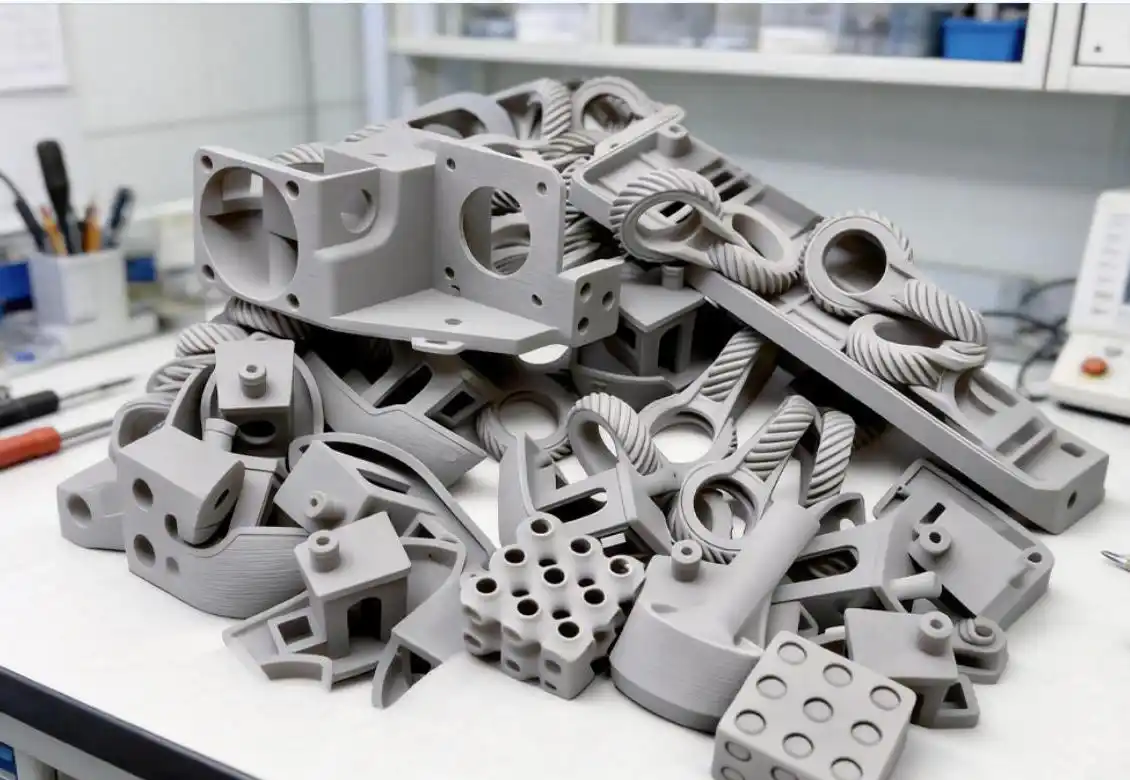
- Surface Finish: SLS parts are typically white (dyeable) with a grainy texture; MJF parts are naturally grey/black with a slightly smoother feel.
- Detail Resolution: SLS generally offers sharper edges for fine details, while MJF excels in overall production speed for large batches.
Introduction
When it comes to industrial powder-bed 3D printing for nylon parts, engineers usually face a choice between two dominant technologies: Selective Laser Sintering (SLS) and Multi Jet Fusion (MJF). Both produce strong, functional parts without the need for support structures, but their underlying mechanics and final part characteristics differ.
How They Work
Selective Laser Sintering (SLS)
SLS uses a high-powered CO2 laser to trace the cross-section of a 3D model onto a bed of nylon powder, heating the powder just enough to fuse it together. The bed lowers, a new layer of powder is spread, and the process repeats.
Multi Jet Fusion (MJF)
Developed by HP, MJF works more like a 2D inkjet printer. It sweeps across the powder bed, depositing a fusing agent on the areas to be solidified and a detailing agent on the edges. An infrared heating lamp then passes over the bed, melting the areas with the fusing agent.
Feature Comparison
| Feature | SLS (Selective Laser Sintering) | MJF (Multi Jet Fusion) |
|---|---|---|
| Heat Source | CO2 Laser | Infrared Lamp + Fusing Agent |
| Natural Color | White (Easily dyed to any color) | Grey/Black (Usually dyed solid black) |
| Feature Detail | Excellent for sharp edges and fine text | Good, but edges can be slightly rounded |
| Production Speed | Fast, but depends on laser tracing time | Very fast for large, dense batches |
| Material Variety | Wide (PA12, PA11, Glass-filled, Carbon-filled, TPU) | Growing, but primarily PA12 and PA11 |
Which Should You Choose?
Choose SLS If:
- You need parts in colors other than black (SLS white nylon dyes beautifully into vibrant colors).
- Your design features very fine, sharp details or embossed text.
- You require specialized composite materials like Glass-Filled Nylon (PA12GB) for high heat resistance.
Choose MJF If:
- You are producing a very large batch of parts where the inkjet-style sweeping motion offers a speed advantage.
- You prefer a naturally darker part and intend to dye it black anyway.
- You need slightly more isotropic mechanical properties (though SLS is also highly isotropic).
Conclusion
Both SLS and MJF are exceptional technologies for manufacturing functional nylon parts. At TPM3D, we specialize in providing professional SLS 3D printing services because of its proven reliability, superior detail resolution, and unmatched material versatility. If you need high-precision functional prototypes or small-batch production, feel free to contact us for a quote.
Related Case Studies
See how we have delivered results in similar projects
 Medical
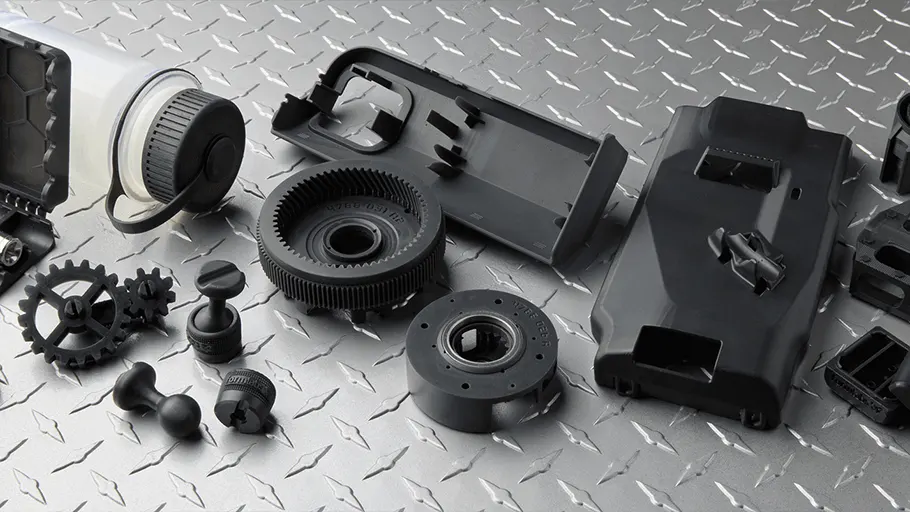
Spinal Orthosis Solution
Custom 3D printed spinal braces providing personalized solutions for scoliosis patients.
 Industrial
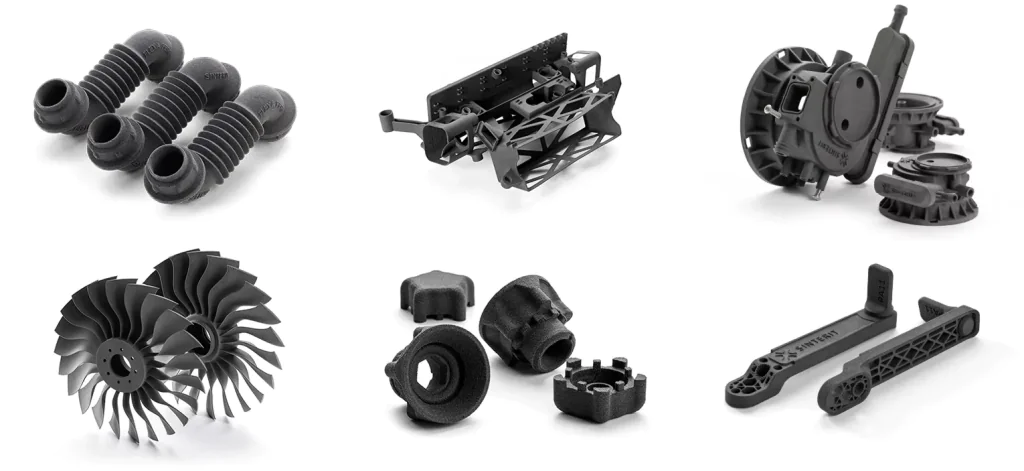
Precision Small Parts Production
Batch production of precision small parts for multiple industry clients with complex geometries.
 Automotive
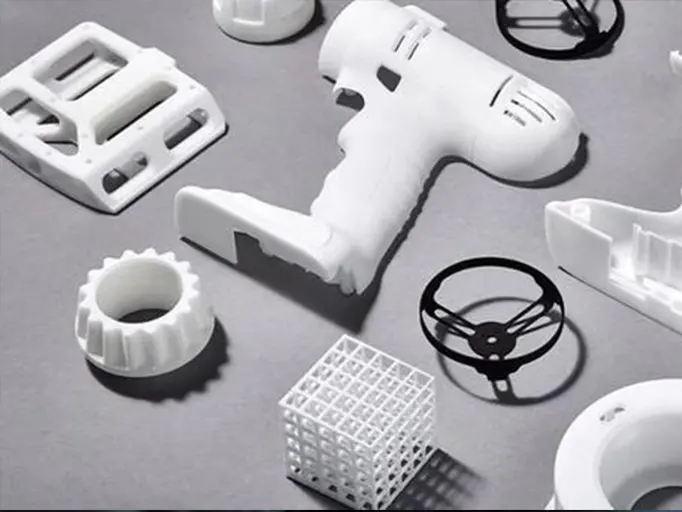
Automotive Prototype Parts
Functional automotive prototype parts for design validation and aerodynamic testing.