Automotive functional prototypes
SLS 3D Printing for Automotive Functional Prototypes
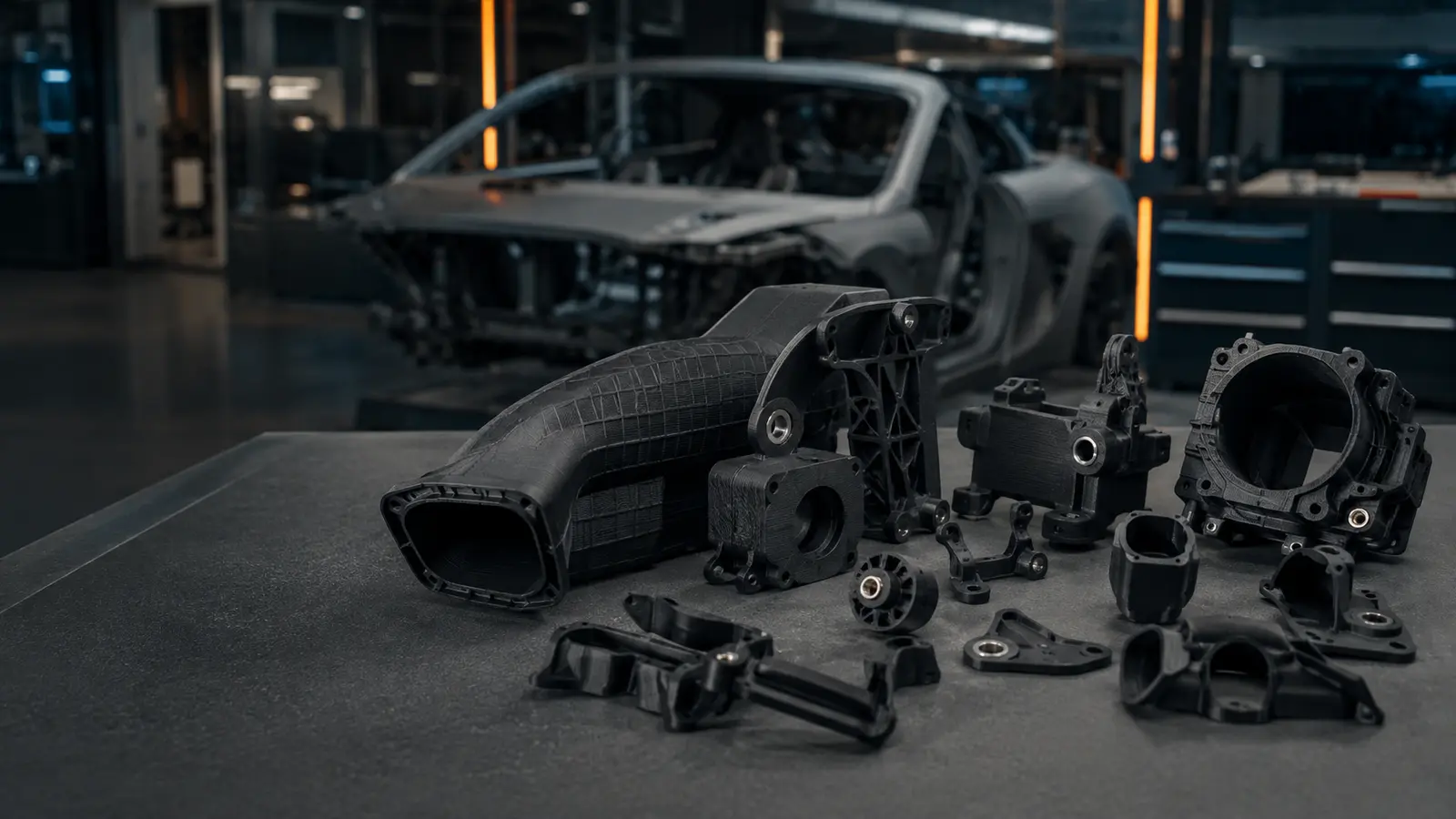
Develop clips, ducts, brackets, sensor housings and EV hardware prototypes with engineering-grade nylon and DFM review before low-volume builds.
Target customers
Industry pain points
What makes this application difficult?
- !Automotive prototypes often need functional performance before injection molding or production tooling.
- !Clips, ducts and brackets may fail if wall thickness, snap geometry or insert zones are not reviewed early.
- !Prototype teams need project-specific evidence for fit, assembly and vehicle-test decisions.
SLS solution
How SLS helps before tooling
- ✓SLS can be evaluated for ducts, brackets and housings when geometry, cleaning access and acceptance requirements are defined.
- ✓PA12, PA11 and PA12GB are material families; select the exact grade from current supplier data and project-specific evidence.
- ✓DFM review should identify critical fit, assembly clearance, post-processing, hardware, inspection and validation needs before printing.
Application modules
Parts commonly reviewed for Automotive Prototypes
Use these examples to prepare CAD files, quantities and critical-feature notes for RFQ review.
Automotive clips and retainers
Air ducts and routing channels
Sensor housings and covers
EV hardware brackets
Interior functional prototypes
Mounting adapters and spacers
Low-volume test fixtures
Assembly validation parts
Material recommendation
Choose PA12, PA11, PA12GB or TPU by function
Material choice should follow the real load case: stiffness, impact resistance, repeated flexing, contact feel and finishing requirements.
Case module
Problem-material-quantity-cycle-result format
This de-identified pattern shows the kind of project information that makes DFM review and quotation more accurate.
Design advice
DFM notes before uploading CAD
Review snap-fit roots, fastener zones and duct wall thickness before ordering parts.
Add powder-removal openings for duct-like or enclosed geometries.
Specify which dimensions are assembly-critical and which surfaces are cosmetic.
Use threaded inserts or metal hardware where repeated assembly or vibration is expected.
Clarify whether the prototype is for bench fit, vehicle assembly, road testing or customer demonstration.
Related engineering resources