Footwear prototyping
SLS and TPU 3D Printing for Footwear Prototyping
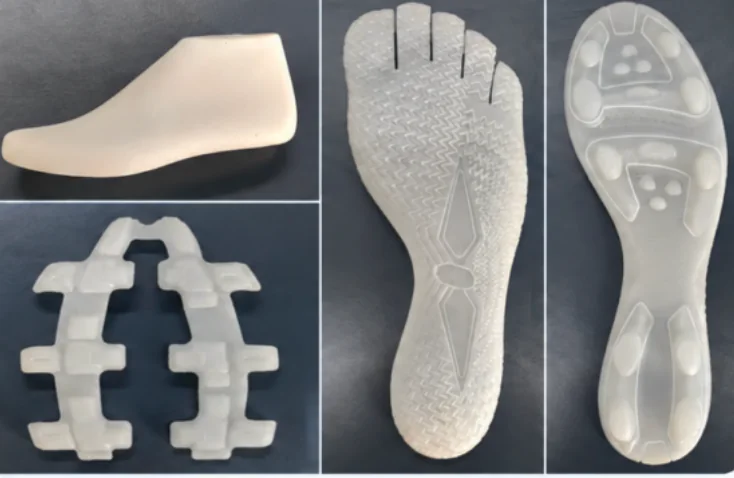
Support footwear innovation with printed shoe lasts, lattice sole samples, PA11 components and functional prototypes for faster design and fit evaluation.
Target customers
Industry pain points
What makes this application difficult?
- !Footwear teams need to compare geometry, fit and sole concepts before investing in molds.
- !Sole prototypes, shoe lasts and experimental lattice samples often need multiple design iterations.
- !Material choice must balance stiffness, flexibility, skin feel and dimensional stability.
SLS solution
How SLS helps before tooling
- ✓SLS can produce shoe lasts, upper components, cleat concepts and functional footwear hardware without tooling.
- ✓TPU or other flexible grades can be screened for lattice samples only after grade availability, geometry limits and the validation objective are defined.
- ✓PA11 and PA12 are material families; suitability depends on the exact grade, geometry, interfaces, finish and project evidence.
Application modules
Parts commonly reviewed for Footwear Innovation
Use these examples to prepare CAD files, quantities and critical-feature notes for RFQ review.
Shoe last prototypes
TPU lattice sole samples
Sole tooling concept models
Cleat plate and outsole prototypes
Footwear hardware and clips
PA11 flexible components
Fit-check fixtures and gauges
Sports product concept samples
Material recommendation
Choose PA12, PA11, PA12GB or TPU by function
Material choice should follow the real load case: stiffness, impact resistance, repeated flexing, contact feel and finishing requirements.
Case module
Problem-material-quantity-cycle-result format
This de-identified pattern shows the kind of project information that makes DFM review and quotation more accurate.
Design advice
DFM notes before uploading CAD
Separate visual concept samples from functional wear-test samples in the RFQ.
Confirm lattice cell size, minimum strut thickness and cleaning access before printing.
Account for finishing thickness when evaluating shoe lasts or fit-check fixtures.
Use PA12 for stable lasts and PA11 or TPU only when flexibility is part of the test objective.
Provide target size, left/right version and expected batch quantities early to reduce quotation ambiguity.
Related engineering resources