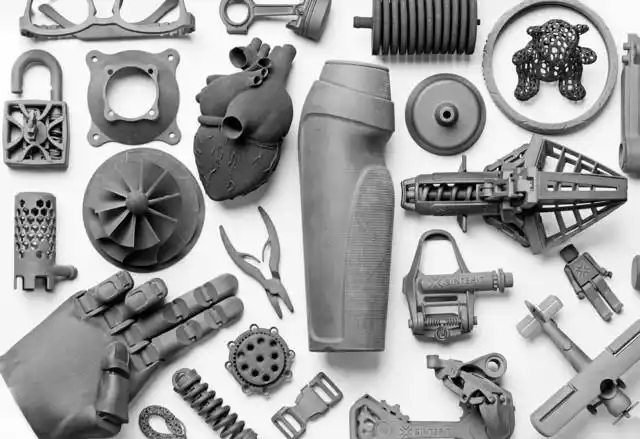
Selective laser sintering (SLS) can produce functional nylon parts for end use, but production approval should be based on a defined requirement set—not on the words “SLS,” “nylon,” or “production grade.” Qualify the exact material grade, geometry, build and finishing route, critical interfaces, inspection plan and representative functional tests. If those inputs are incomplete, the appropriate output is a prototype or evidence plan rather than a blanket production claim.
An SLS end-use nylon part is a polymer powder-bed-fusion component intended to perform a continuing function after delivery, rather than serving only as a visual model. Its qualification boundary includes the part definition, material, manufacturing route, post-processing, inspection, assembly and use environment.
What does “qualified for end use” mean?
Qualification means the buyer and manufacturer have translated the application into traceable requirements and have evidence that the delivered part meets the agreed acceptance criteria. It does not mean that one successful sample proves every future build, geometry or material.
ISO/ASTM 52901 describes information that buyers and suppliers exchange for purchased additive-manufactured parts, including part definition, feedstock, final characteristics, inspection and acceptance. ASTM F3091/F3091M addresses requirements and component integrity for plastic parts made by powder bed fusion. ISO/ASTM 52924 provides a classification framework for mechanical, physical and geometrical properties of additively manufactured polymer parts.
These standards provide a requirements framework. They do not certify a TPM3D part or replace application-specific engineering approval.
Which requirements should be frozen before production?
Use a controlled requirement set that answers six questions:
- What is the part? Record CAD, drawing, revision, units, coordinate system and the authoritative file when models conflict.
- What must it do? Define loads, motion, contact, sealing, wear, electrical or fluid function and the consequence of failure.
- Where will it operate? State temperature, chemicals, moisture, UV, cleaning, abrasion, dust and any regulated environment.
- How must it interface? Mark datums, fits, fasteners, inserts, bearings, seals, mating surfaces and prohibited finishing zones.
- What evidence is required? Identify dimensions, documentation, tests, sampling and acceptance rules.
- What is commercial scope? Provide quantity by stage, packaging, destination and target date for a project-specific quotation.
Use the SLS RFQ guide and service workflow to organize the submission. A requirement that is not documented can easily become an assumption.
How should an exact nylon grade be selected?
Start with function, then shortlist an exact grade. PA12, PA11, filled nylon and flexible materials are families, not finished-part guarantees.
| Decision area | Evidence to request | Why it matters |
|---|---|---|
| Mechanical behavior | Current grade TDS, test method, specimen state and relevant printed-part evidence | Nominal values may not represent the final geometry or orientation |
| Environment | Chemical, moisture, temperature and UV requirements with an agreed test basis | Suitability depends on exposure level, duration and acceptance criteria |
| Interfaces | Fastener, insert, seal, bearing and mating-part details | Assembly can fail even when a material coupon passes |
| Finish | As-built, blasting, dyeing, smoothing, coating and masked surfaces | Finishing can affect appearance, edges, fits and inspection access |
| Documentation | Lot, process, inspection or test records actually required | Documentation scope must be agreed before quotation and production |
Use the PA12 vs PA11 evidence checklist and materials overview to prepare questions. Request the current TDS for the grade under consideration; do not transfer a family-level statement into a guaranteed part property.
Why are TDS values not enough on their own?
A technical data sheet is valuable for screening, but it may report results from defined specimens rather than the customer’s assembled part. NIST’s AMB2018-04 polymer powder-bed-fusion benchmark examined PA12 builds across build dimensions and measured shape, voids, mass, crystallinity and tensile properties. The study illustrates why process, build location or orientation, specimen preparation and measurement method belong in the evidence boundary.
For an end-use decision, connect the grade-level data to representative manufacturing and the real acceptance criteria. If no suitable correlation exists, plan a part test, coupon test or pilot build and state its limitation.
What production controls should be agreed?
The control plan should match risk and purchasing requirements. Relevant items may include:
- approved material grade and any permitted substitution process;
- authoritative CAD, drawing and revision;
- build identification and traceability required by the order;
- agreed orientation or controlled surfaces when function depends on them;
- depowdering, cleaning, conditioning and post-processing route;
- insert or hardware part numbers and installation method;
- handling, packaging and labeling requirements;
- nonconformance and change-approval process.
Do not request records that the application does not need, but do not assume a record exists unless it is included in the order.
How should inspection and validation be planned?
Separate inspection from functional validation. Inspection checks whether delivered characteristics match the drawing or quality plan. Validation checks whether the representative part performs its intended function under defined conditions.
A practical sequence is:
- verify identity, revision, quantity and material documentation;
- inspect visible condition, cleanliness and post-processing scope;
- measure controlled dimensions, datums and interfaces with an agreed method;
- assemble representative hardware and mating parts;
- test the defined load, motion, sealing, wear or environment as applicable;
- record sample, method, conditions, acceptance criteria and result;
- approve, revise or reject the route without generalizing beyond the tested scope.
Use the revised SLS design and DFM checklist for geometry review and the robot gripper guide for an application-specific validation example.
When is SLS not the right production route?
Keep another qualified process, a hybrid assembly or a prototype-only status when:
- the load case, environment or failure consequence is not sufficiently defined;
- the required grade, test method or compliance evidence is unavailable;
- critical internal features cannot be cleaned or inspected;
- wear, heat, chemical, electrical or sealing needs exceed the available evidence;
- a safe and representative validation plan cannot be agreed;
- quantity, geometry and commercial requirements favor another established process.
This is a selection decision, not a judgment that one manufacturing process is universally better.
What should the RFQ and evidence package include?
Send:
- controlled CAD and drawing with revision and units;
- application, load, interfaces, environment and failure consequence;
- exact grade or property priorities and required source documents;
- prototype, pilot and repeat-order quantities;
- critical dimensions, datums and inspection methods;
- finish, color, cleanliness, masking and hardware requirements;
- functional test and acceptance criteria;
- traceability, report, packaging and labeling requirements;
- target date and delivery destination.
TPM3D can review these inputs before confirming manufacturability, evidence scope, price and schedule. Submit the project files for DFM review without treating an initial shortlist as final approval.
Primary references and evidence boundary
- ASTM F3091/F3091M: Powder Bed Fusion of Plastic Materials
- ISO/ASTM 52901: Requirements for Purchased AM Parts
- ISO/ASTM 52924:2023: Classification of Polymer AM Part Properties
- NIST AMB2018-04: PA12 Powder Bed Fusion Benchmark
The sources support terminology, procurement structure, property classification and the need for bounded measurement evidence. They do not establish a universal tolerance, service life, certification, lead time or performance guarantee for TPM3D parts.
Frequently Asked Questions
Can SLS nylon be used for functional end-use parts?
SLS nylon can be considered for end-use parts when the exact grade, geometry, loads, environment, interfaces, finish, inspection and acceptance tests are defined. The process or material-family name alone does not qualify a part. Approval should rely on project-specific evidence from representative production and testing.
What must be specified before ordering an SLS production part?
Provide controlled CAD and drawings, quantity, revision, exact material or required properties, critical dimensions, datums, surface and color requirements, hardware, environment, inspection method, acceptance criteria, documentation, packaging and delivery destination. Separate mandatory requirements from preferences so the supplier can identify conflicts before production.
Is a material TDS enough to approve an SLS part?
No. A TDS helps shortlist an exact grade, but it may use specimen geometries, orientations, conditioning and test methods that differ from the final part. Approval should connect grade-level data with the actual geometry, process route, post-processing, interfaces and representative part or coupon testing.
How should SLS production parts be inspected?
Inspect only against agreed requirements. Typical checks may include identity and revision, quantity, visual condition, controlled dimensions and datums, mass, hardware, finish, cleanliness and functional interfaces. The drawing or quality plan should state the method, sampling level and acceptance rule for each required characteristic.
When should SLS not be used for an end-use nylon part?
Choose another process or keep the project at prototype stage when critical loads or environments are unknown, required material or compliance evidence is unavailable, interfaces cannot be inspected, failure consequences exceed the validation plan, or expected quantity and geometry make another qualified route more appropriate.
Related Case Studies
See how we have delivered results in similar projects
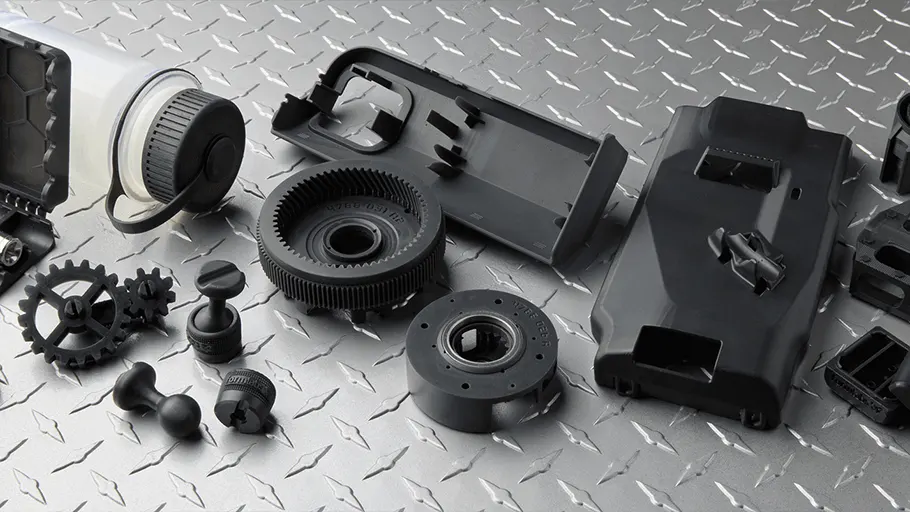 Medical
Spinal Orthosis Solution
Custom 3D printed spinal braces providing personalized solutions for scoliosis patients.
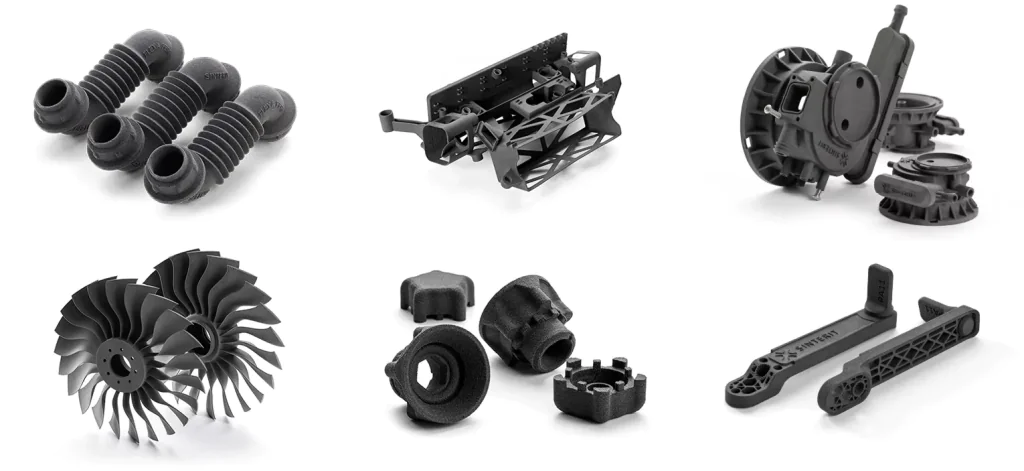 Industrial
Precision Small Parts Production
Batch production of precision small parts for multiple industry clients with complex geometries.
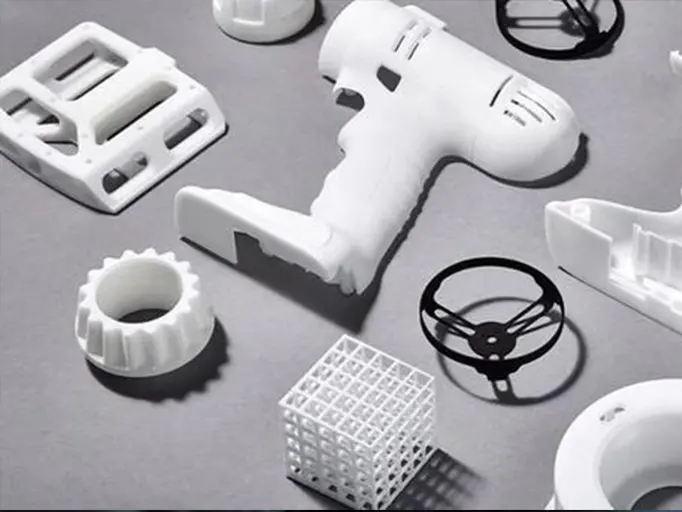 Automotive
Automotive Prototype Parts
Functional automotive prototype parts for design validation and aerodynamic testing.