Introduction
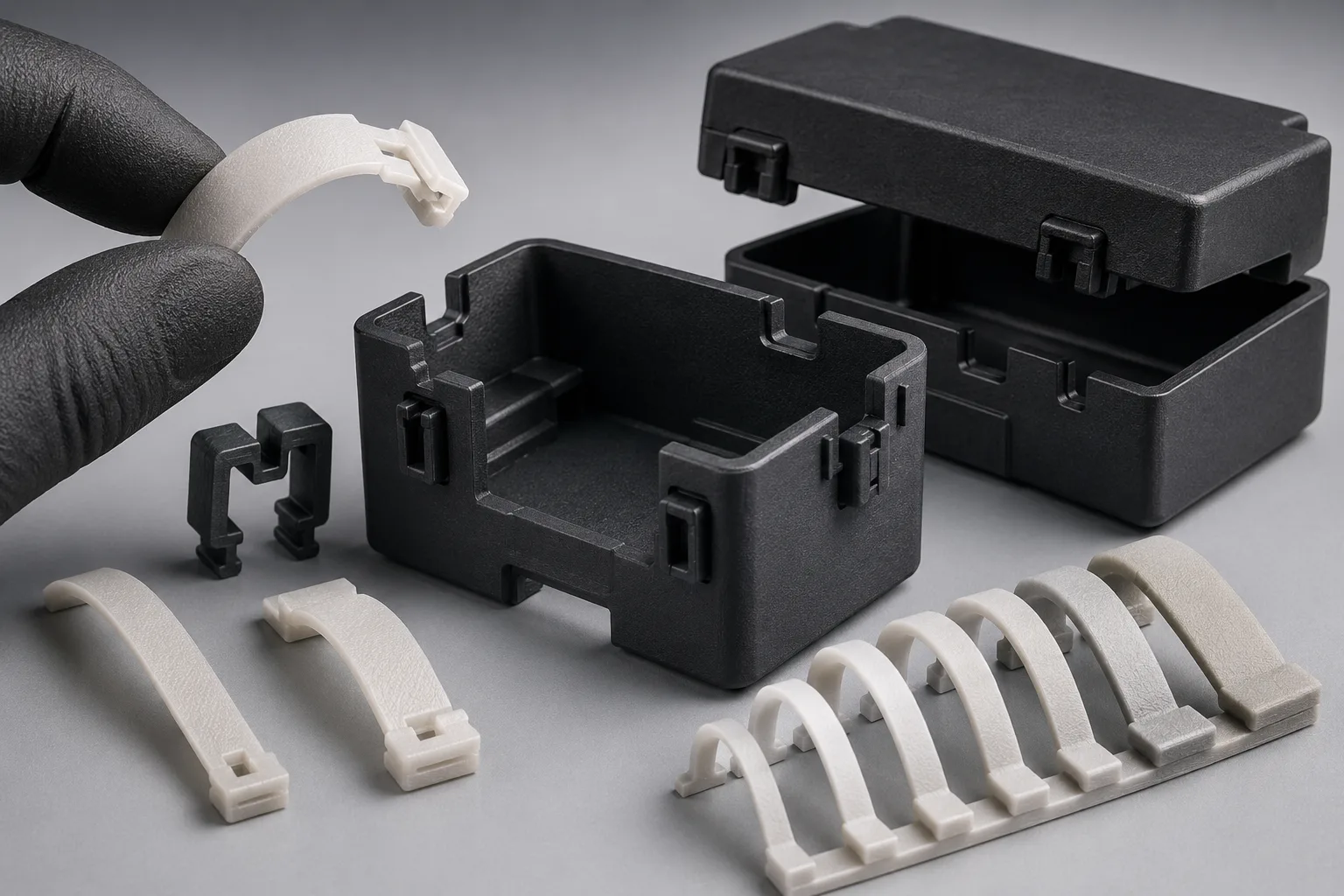
Snap-fit parts are one of the most common reasons engineers choose SLS 3D printing for functional prototypes and low-volume production. SLS can create complex clips, hooks, tabs, covers, and enclosure features without support structures or tooling.
But the success of a snap-fit is not only a design question. Material choice strongly affects whether the feature survives first assembly, repeated opening, vibration, and real handling. A design that works in one nylon material may crack, feel loose, or become too stiff in another.
For most SLS snap-fit applications, the key comparison is between PA12, PA11, and sometimes glass-filled nylon. Each material has a different balance of stiffness, ductility, and long-term behavior.
Fast Material Rule
Use this as a starting point:
- Choose PA12 for moderate deflection, stable general-purpose parts, and balanced prototype behavior.
- Choose PA11 for repeated flexing, larger deflection, and snap-fits that need better ductility.
- Avoid glass-filled nylon in most active snap-fit zones because it is usually too stiff and less forgiving.
This rule should be combined with geometry review. A poorly designed PA11 snap-fit can still fail, and a carefully designed PA12 snap-fit can work well in many moderate-use applications.
PA12 for General-Purpose Snap-Fits
PA12 is often the first material engineers consider for SLS parts. It is widely used, dimensionally stable, and suitable for many functional prototypes and low-volume nylon components.
PA12 is a good fit when:
- the snap-fit only deflects a moderate amount
- the part needs a stable structural feel
- assembly is not repeated many times
- the snap feature is not extremely thin
- the product is still in prototype or fit-check stage
The risk with PA12 appears when the clip is forced to bend too far. If the snap root is sharp, the arm is too short, or the insertion angle is aggressive, PA12 may crack or whiten at the base.
PA11 for Repeated Flexing
PA11 is usually the better candidate when the snap-fit needs repeated use or larger deflection. Its more ductile behavior makes it useful for flexible arms, tabs, clips, living-hinge-like features, and wearable or handheld products.
PA11 is worth evaluating when:
- the snap-fit will be opened and closed many times
- the feature needs to bend farther during assembly
- impact resistance and toughness matter
- the part includes multiple flexible areas
- early PA12 samples feel too stiff or brittle
The tradeoff is that PA11 may feel less rigid than PA12 in some structural areas. If the part needs both a stiff housing and a flexible snap feature, the geometry may need local reinforcement around rigid zones while keeping the snap arm flexible.
Why Glass-Filled Nylon Is Usually Risky for Snap-Fits
Glass-filled nylon, such as PA12GB, can be excellent for rigid brackets, fixtures, housings, and machine-side components. It improves stiffness and dimensional control. However, stiffness is not always an advantage for snap-fits.
For active snap features, glass-filled materials can create several risks:
- the clip may require too much force to assemble
- the root may crack under deflection
- repeated bending may reduce life
- sharp transitions become less forgiving
- the part may feel strong but fail suddenly
PA12GB may still be useful for the main body of a structural part, but flexible snap zones should be reviewed very carefully. In many cases, redesigning the clip geometry or switching to PA11 is safer than using a reinforced material for a bending feature.
Geometry Still Matters More Than the Material Name
The right material cannot rescue a bad snap-fit design. Before choosing a material, review the snap geometry:
- Is the snap arm long enough to bend gradually?
- Does the root have a generous radius?
- Is the hook angle too aggressive?
- Will the user need to force the part during assembly?
- Is there enough clearance after finishing and dyeing?
- Does the clip need to survive repeated service access?
A reliable snap-fit usually combines enough arm length, controlled thickness, smooth transitions, and a practical insertion path.
Practical Selection Guide
Choose PA12 when:
- the clip is used mainly for assembly validation
- deflection is moderate
- the part needs good dimensional stability
- the snap feature is not expected to open frequently
- the design needs a balanced general-purpose nylon
Choose PA11 when:
- the feature needs repeated flexing
- the snap arm is thin or highly deflected
- the part must survive service cycles
- the application needs a softer, more ductile response
- early PA12 prototypes crack or feel too stiff
Avoid PA12GB in active snap zones when:
- the clip bends significantly
- the assembly will be opened repeatedly
- the snap root is small or sharp
- the insertion force is high
- failure would create a customer-facing issue
Final Takeaway
For snap-fit features, the best SLS material is usually the one that balances ductility with enough structural control. PA12 works well for many moderate-use snap-fits. PA11 is often better for repeated flexing. Glass-filled nylon should be used carefully because stiffness can become a disadvantage in active bending zones.
Need help choosing between PA12, PA11, and PA12GB for your snap-fit part? Send TPM3D the CAD file, expected assembly cycles, and application notes for a material and DFM review.
Related Case Studies
See how we have delivered results in similar projects
 Medical
Spinal Orthosis Solution
Custom 3D printed spinal braces providing personalized solutions for scoliosis patients.
 Medical
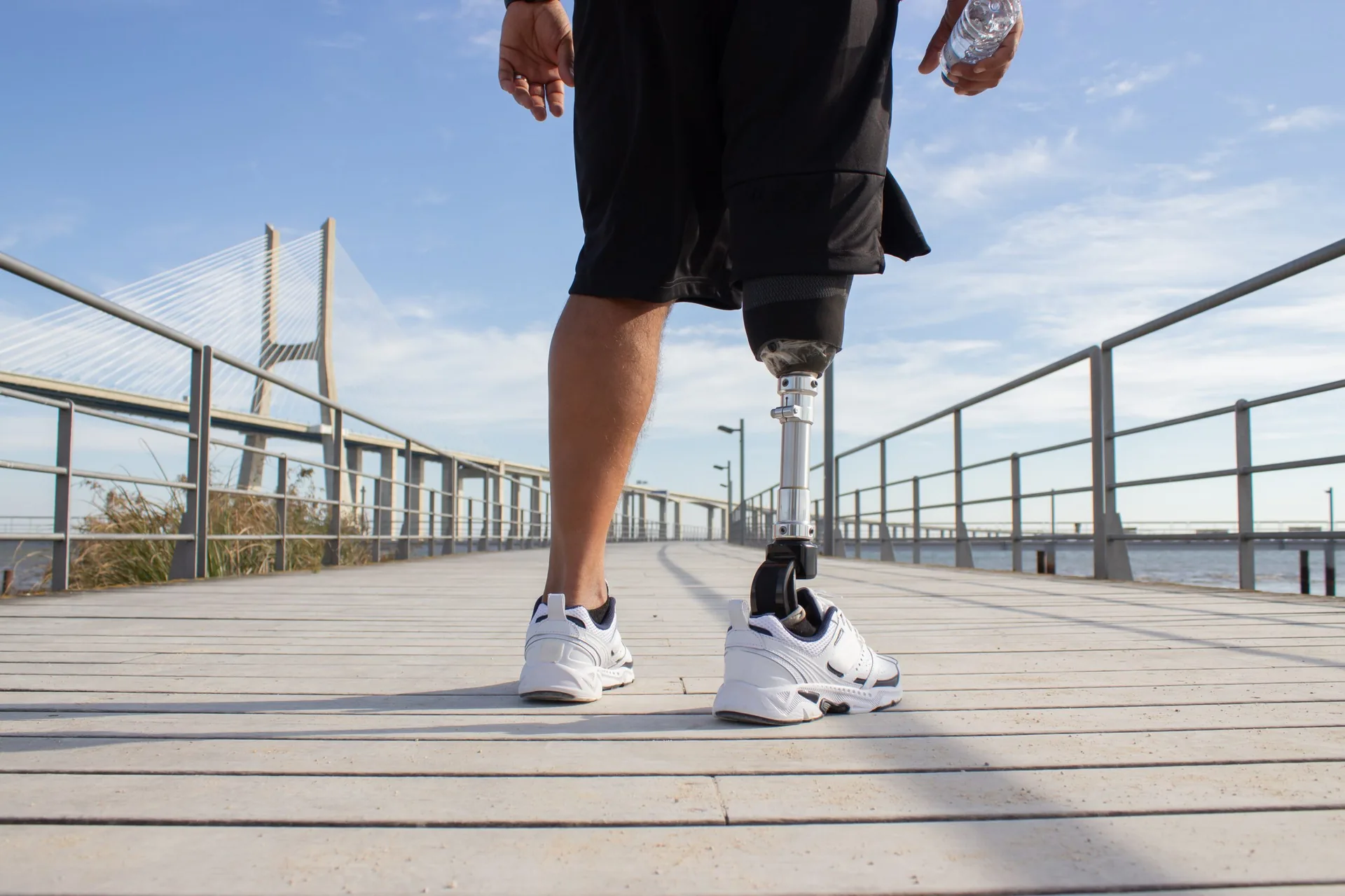
Medical Prosthetic Components
High-performance prosthetic components with lightweight design and excellent mechanical properties.
 Industrial
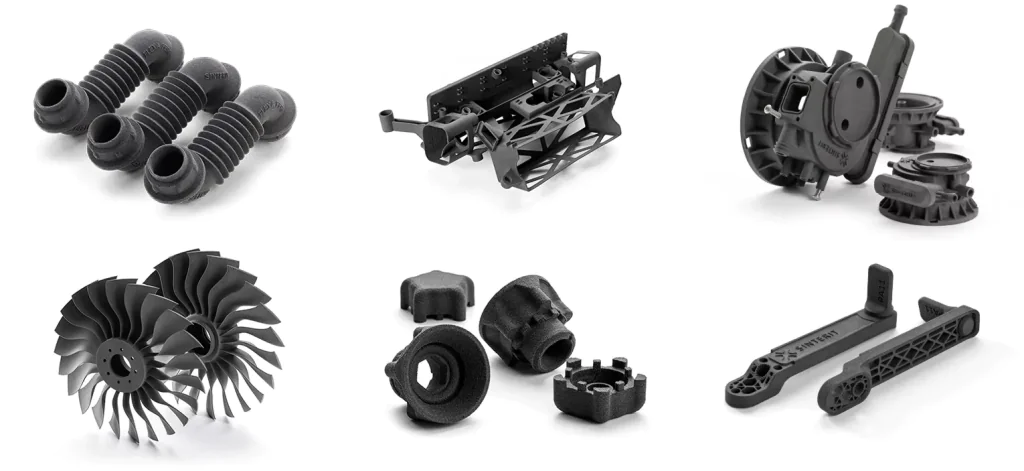
Precision Small Parts Production
Batch production of precision small parts for multiple industry clients with complex geometries.