
Key Takeaways
- German additive manufacturing specialist Cirp added industrial SLS capacity to support functional automotive parts and small-series production.
- A 480 × 480 × 600 mm build volume allows different part numbers and customer orders to be nested in one production cycle.
- PA11 offers the toughness, elongation, and impact resistance needed for demanding automotive applications.
- Controlled powder recovery, sieving, refreshing, and supply improve workflow consistency and material utilization.
- The project shows how SLS can bridge functional prototyping, pilot production, and recurring low-volume manufacturing.
Automotive production between prototyping and injection molding
Automotive manufacturers frequently need functional polymer components in quantities that sit between one-off prototypes and conventional mass production.
These projects may involve validation parts, customized housings, replacement components, functional test assemblies, or several hundred end-use parts. Injection molding can be difficult to justify at these volumes because of tooling cost and lead time, while a basic prototyping process may not provide the material performance, repeatability, or production capacity required for recurring orders.
Cirp GmbH, an established German additive manufacturing service provider, expanded its selective laser sintering capacity with a TPM3D S480 industrial SLS system. The project provides a useful example of how an experienced European service bureau can organize SLS for flexible automotive manufacturing.
Cirp: additive manufacturing in Germany's automotive region
Cirp is based in Heimsheim, within the greater Stuttgart automotive manufacturing region in Baden-Württemberg.
Founded in 1994, the company has more than 30 years of experience producing prototypes, models, tooling, and small-series components. Its manufacturing capabilities include SLS, SLA, FDM, PolyJet, vacuum casting, injection molding, CNC machining, and dimensional inspection.
This combination allows Cirp to support projects from early design validation through functional testing and low-volume production. Its customers operate across automotive, mechanical engineering, medical technology, and other industrial sectors.
The expansion also reflects a wider change in additive manufacturing. Customers no longer use 3D printing only to visualize a design; they increasingly expect production-grade materials, documented quality, and repeatable delivery.
Why automotive small-series work needs a production SLS workflow
Automotive programs often combine several demanding requirements:
- Multiple part numbers within one order
- Short and frequently changing production schedules
- Functional testing under mechanical or environmental loads
- Consistent dimensions across separate production batches
- Traceable engineering materials
- Competitive costs without dedicated tooling
SLS manufactures complex nylon parts without separate support structures or injection molds. Different geometries can be nested throughout the powder bed, so prototypes, replacement components, and small production runs can share available build space.
This makes the process particularly useful for low-volume, high-mix projects. However, increasing production volume also places greater demands on thermal control, powder spreading, material preparation, cooling, and inspection. Stable results depend on the complete workflow, not only the laser or nominal chamber size.
Increasing capacity with the TPM3D S480
Cirp integrated the TPM3D S480 into its existing additive manufacturing operation after evaluating production capacity, material compatibility, and operating efficiency.
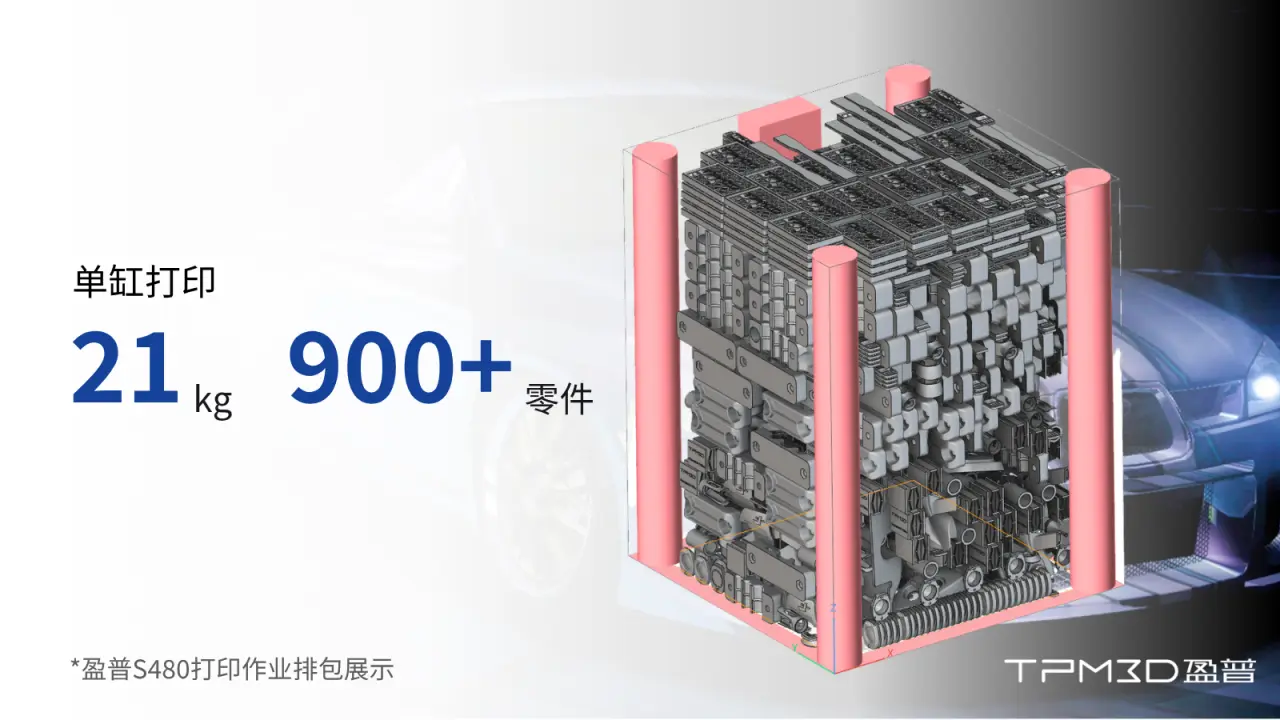
The system has a build volume of 480 × 480 × 600 mm, providing space to nest multiple automotive components in a single build. Depending on geometry and packing density, a production cycle can deliver approximately 18–20 kg of finished polymer parts.
For a service bureau, this capacity is valuable because part variety and recurring production quantities often arrive together. Instead of manufacturing one component at a time, the chamber can be organized around a complete customer order or several compatible projects.
Controlled powder recoating and thermal management also help maintain consistency across the build chamber. The practical advantage is not merely a larger part envelope; it is the ability to schedule more usable components within each production cycle.
PA11 for functional automotive components
The production setup has been used for automotive-related applications including:
- Emergency-vehicle warning-light housings
- Fuel-system sealing components
- Customized vehicle-lighting parts
- Functional polymer housings and assemblies
- Low-volume end-use components
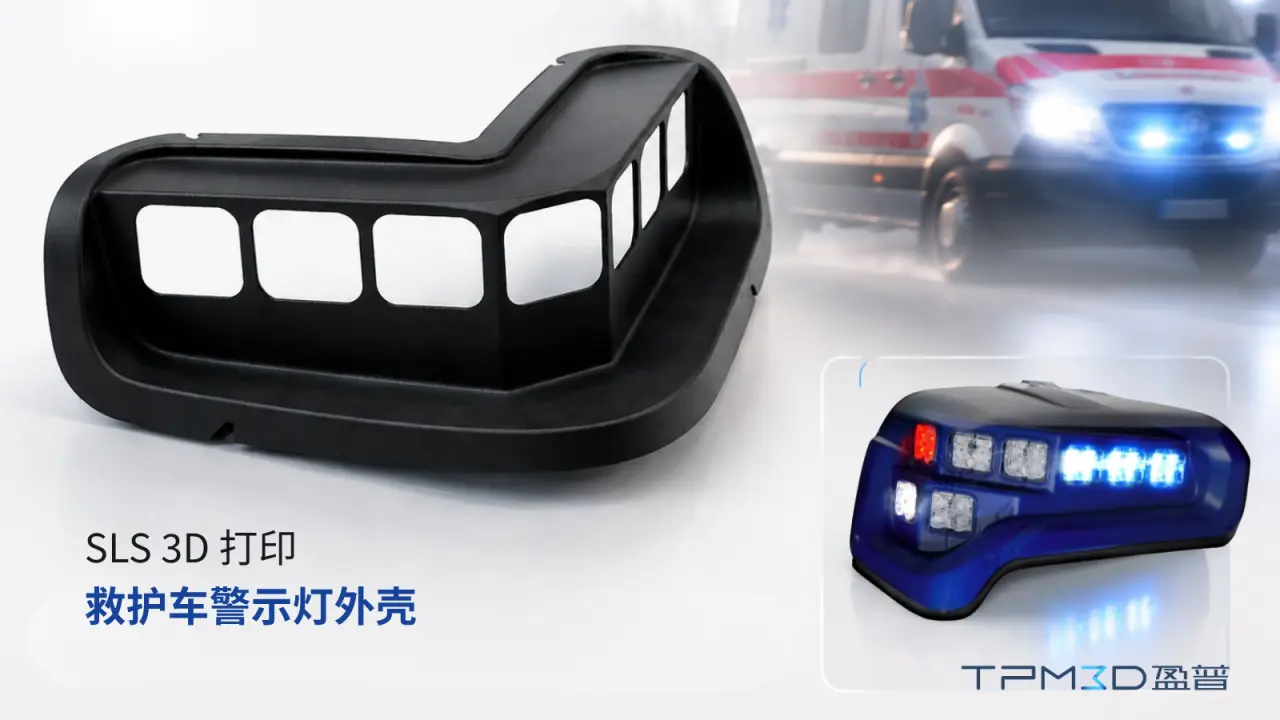
PA11 is especially relevant when a component requires toughness, impact resistance, or controlled flexibility. Compared with a more rigid material, PA11 can absorb greater deformation before failure, making it useful for clips, protective housings, snap features, ducting, and components exposed to repeated mechanical loads.
PA11 is also produced from renewable castor-oil feedstock, which may support material strategies that include bio-based engineering polymers.
For a broader comparison of nylon behavior, read our PA12 versus PA11 material guide.
Powder management is part of production quality
An industrial SLS build is only one stage of the production process.
After printing, powder must be cooled, recovered, cleaned, sieved, blended, and returned to the manufacturing workflow under controlled conditions. Excessive manual handling can add labor and introduce variation between production batches.
Cirp therefore uses a powder-processing station alongside the S480.
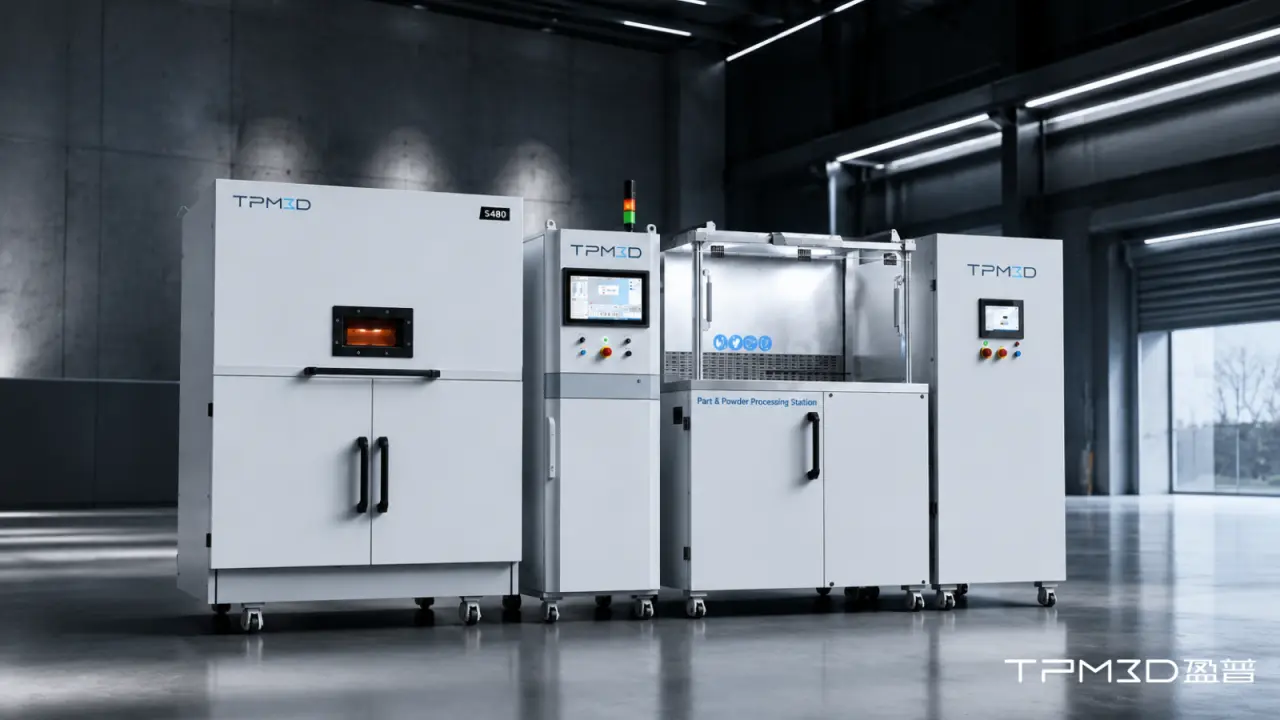
The workflow includes:
- Controlled cooling
- Part unpacking and powder recovery
- Powder cleaning and sieving
- Addition of fresh powder
- Mixing of refreshed and recovered material
- Powder supply for the next build
A controlled powder workflow improves material utilization and reduces manual handling steps. More importantly, it supports consistent material preparation between builds.
For automotive buyers, this matters because repeatability depends on both the printing system and the way material is managed before and after every production cycle.
Five lessons for automotive engineering and sourcing teams
1. Evaluate production capacity, not only sample quality
A supplier may produce a successful prototype but still lack the chamber capacity, powder-management controls, inspection resources, or scheduling discipline required for recurring orders.
Ask how the supplier manages build records, material batches, cooling, post-processing, and inspection—not only which printer is used.
2. Select material from the real operating conditions
PA12 is a strong general-purpose material. PA11 may be preferable where impact resistance, elongation, or fatigue behavior is more important. Glass-filled nylon can provide higher rigidity and dimensional stability for selected structural applications.
Material selection should consider load, temperature, chemicals, moisture, UV exposure, assembly method, and required service life.
3. Identify critical requirements with the CAD files
Mark tolerance-critical dimensions, assembly interfaces, sealing surfaces, cosmetic faces, expected loads, and operating temperature before quotation.
This enables the manufacturing team to review material choice, wall thickness, print orientation, post-processing, and inspection requirements correctly. Our SLS design guidelines for engineers provide a useful starting point.
4. Use a pilot batch before recurring production
A pilot batch can confirm dimensional stability, assembly performance, surface finish, packaging, and inspection criteria before the order moves to a larger recurring quantity.
The pilot should use the intended production material and finishing route. A visually acceptable prototype made with a different process is not a substitute for production validation.
5. Include post-processing in the specification
Bead blasting, dyeing, vapor smoothing, painting, machining, tapping, and metal inserts can affect final appearance, dimensions, sealing, and assembly performance.
Separate cosmetic requirements from critical functional surfaces so the supplier can quote and control the correct finishing route.
From prototype to repeatable small-series manufacturing
Cirp's expansion demonstrates how industrial SLS is moving beyond its traditional prototyping role.
For automotive projects with complex geometry, multiple variants, or uncertain demand, SLS can provide a practical bridge between design validation and conventional mass production. Manufacturers can begin with functional prototypes, complete pilot testing, and continue into small-series delivery without first investing in molds.
The most successful programs are supported by a complete manufacturing system: engineering review, suitable material selection, stable thermal processing, controlled powder management, defined post-processing, and batch inspection.
Planning an automotive SLS project?
Send non-confidential CAD files through our engineering-reviewed SLS quotation form, together with target quantity, material requirements, critical dimensions, and finishing expectations.
TPM3D can review your automotive component for PA11, PA12, or glass-filled nylon selection, manufacturability, batch planning, surface finishing, and inspection requirements before quotation.
Source note: This independent case analysis was adapted from a TPM3D customer application report and supplemented with publicly available information from Cirp GmbH. Read the original TPM3D application report and Cirp company profile.
Related Case Studies
See how we have delivered results in similar projects
 Automotive
 Prototype Parts
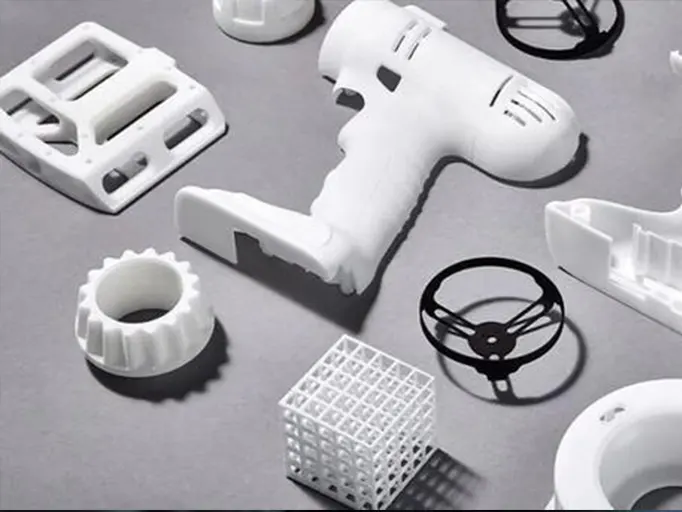
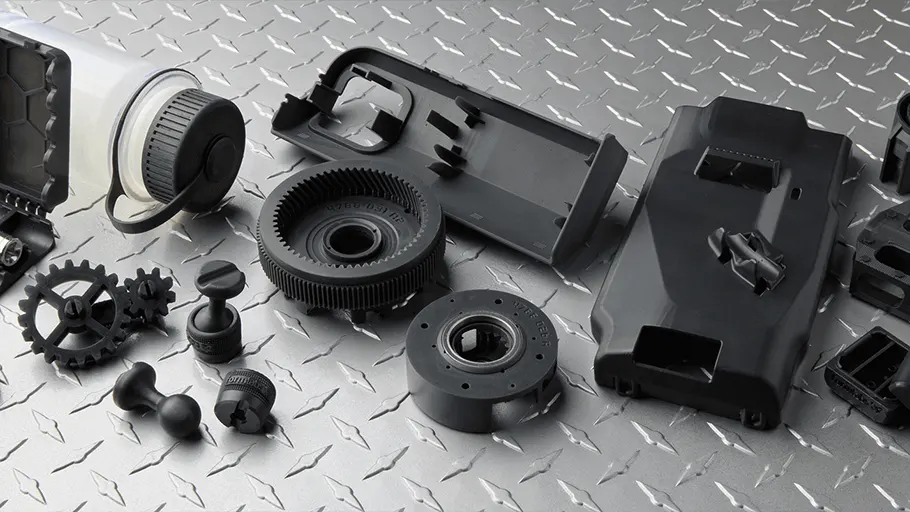
Functional automotive prototype parts for design validation and aerodynamic testing.
 Medical
Spinal Orthosis Solution
Custom 3D printed spinal braces providing personalized solutions for scoliosis patients.
 Industrial
Precision Small Parts Production
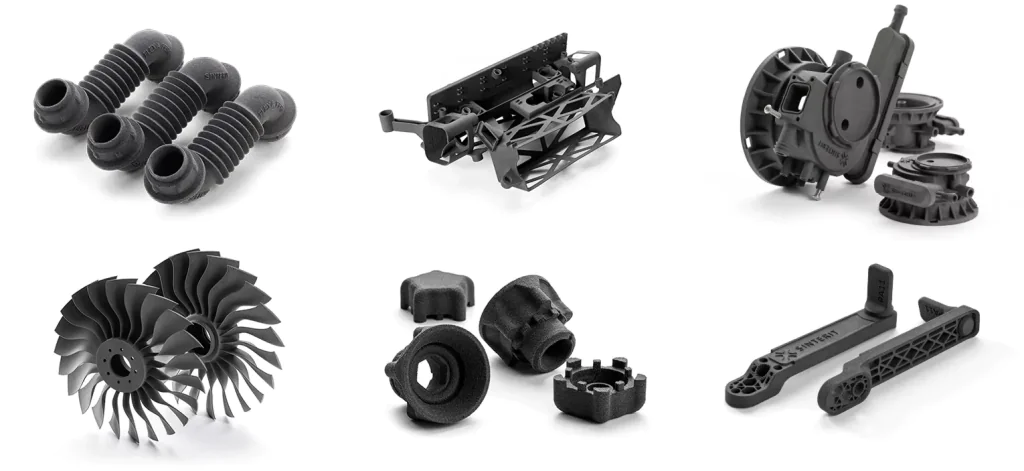
Batch production of precision small parts for multiple industry clients with complex geometries.