Introduction
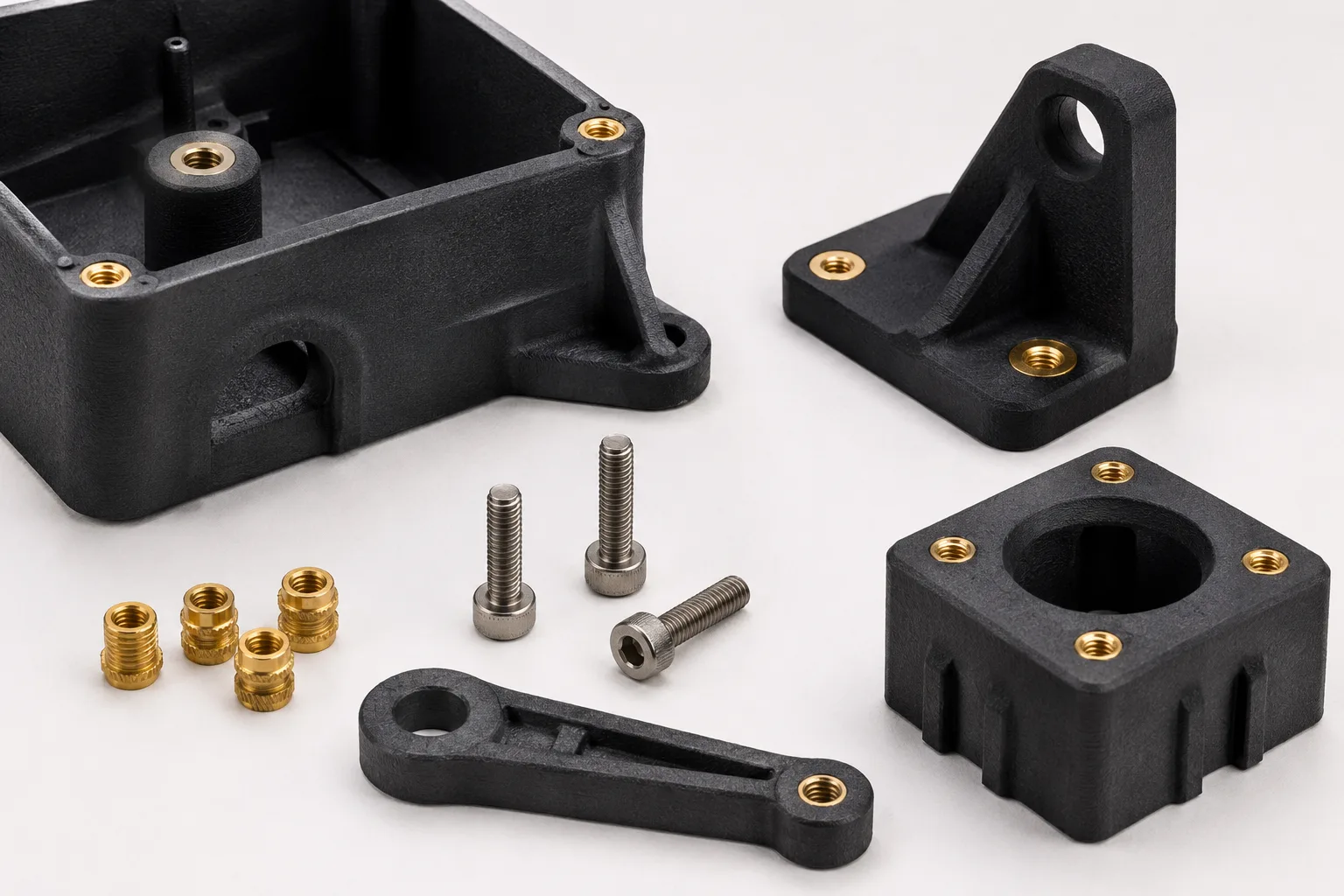
Printed nylon threads can work well in many SLS prototypes, but they are not always the best choice for repeated assembly. When a part must be opened often, hold torque more reliably, survive vibration, or feel closer to a production interface, threaded inserts usually make more sense.
The key question is not whether SLS can print threads. It can. The better question is whether the printed thread is suitable for the real use case.
For early design validation, printed threads may be simple and fast. For pilot production, customer-facing assemblies, or parts that will be serviced repeatedly, inserts often provide a more durable fastening strategy.
Printed Threads vs. Threaded Inserts
A printed thread is created directly in the SLS nylon part. It keeps the part simple and avoids secondary hardware. This can be useful for low-load prototypes or one-time assembly.
A threaded insert is a separate metal component installed into the printed part. It adds a secondary process, but it can improve thread durability, torque retention, and repeated-use performance.
The right choice depends on load, cycle count, thread size, assembly method, and whether the fastening point is critical to the product.
Good Use Cases for Inserts
Threaded inserts are especially valuable when:
- the part will be opened repeatedly
- screw retention matters
- the assembly sees vibration
- the product is customer-facing
- torque consistency is important
- the thread is part of a service interface
- the part is moving from prototype toward pilot production
In these cases, the insert becomes an engineering interface rather than just a fastening convenience.
When Printed Threads Are Enough
Printed threads may still be acceptable for:
- one-time assembly
- light-duty covers
- quick design validation
- large thread sizes with low torque demand
- internal prototypes where service life is not critical
- temporary fixtures or test parts
For these situations, printed threads can reduce cost and lead time. They also keep the CAD and post-processing workflow simple.
Design Rules for Threaded Inserts in SLS Nylon
1. Add Enough Wall Around the Insert
The insert needs enough surrounding material to resist splitting and pull-out. Avoid placing inserts too close to thin walls, sharp corners, or the edge of the part.
If the wall is too thin, the insert may crack the boss during installation or create stress during tightening.
2. Use a Proper Boss Geometry
A good insert boss should have smooth transitions and enough base support. Avoid tall, thin bosses without ribs. If the boss carries load, connect it into the surrounding structure with fillets and load paths.
3. Avoid Over-Torque
Metal inserts can make the interface feel stronger, but the surrounding material is still printed nylon. Assembly torque should be controlled. If the screw load is too high, the insert may remain intact while the printed boss deforms or cracks.
4. Consider Installation Method
Different inserts require different installation approaches, such as heat staking, press-fit, or adhesive-assisted installation. The installation method affects hole size, boss design, post-processing sequence, and quality control.
For SLS nylon, the supplier should confirm the recommended hole diameter and tolerance based on the actual insert and process.
5. Keep Inserts Away from Flexible Features
If a threaded insert is placed close to a snap-fit, living hinge, or flexible tab, the local stiffness change can create a stress concentration. Leave enough separation or reinforce the transition.
RFQ Notes for Insert-Ready SLS Parts
When requesting a quote, include:
- insert type or thread size
- expected screw torque
- whether the assembly will be opened repeatedly
- whether vibration is present
- whether the supplier should install inserts or only print insert-ready holes
- any required pull-out or torque testing
This information helps avoid a quote that only covers printing but misses the hardware integration work.
Final Takeaway
Use printed threads when simplicity is enough. Use threaded inserts when the fastening point is expected to behave like a long-term engineering interface.
Need help deciding whether your SLS part should use printed threads or threaded inserts? Our SLS prototyping services include project-specific DFM review; send the CAD file, thread size, expected assembly cycles, and torque requirements.
Related Case Studies
See how we have delivered results in similar projects
 Medical
Spinal Orthosis Solution
Custom 3D printed spinal braces providing personalized solutions for scoliosis patients.
 Industrial
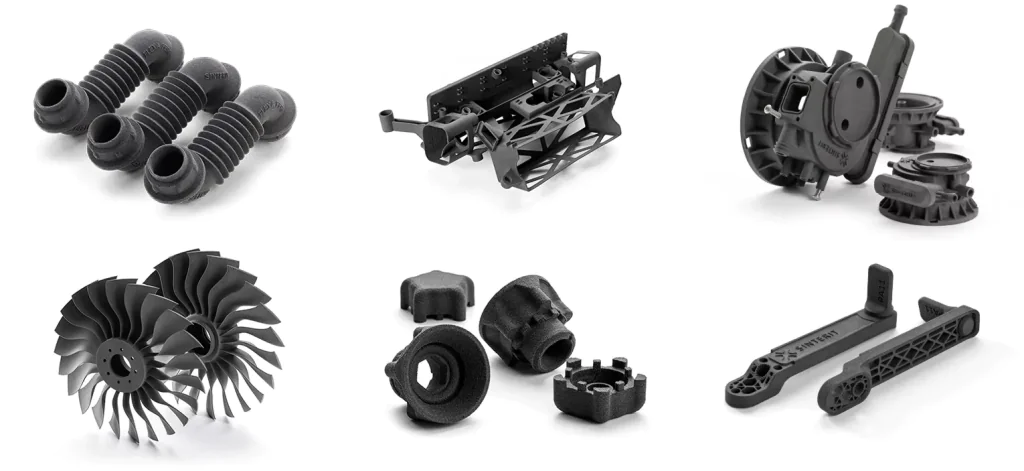
Precision Small Parts Production
Batch production of precision small parts for multiple industry clients with complex geometries.
 Automotive
Automotive Prototype Parts
Functional automotive prototype parts for design validation and aerodynamic testing.