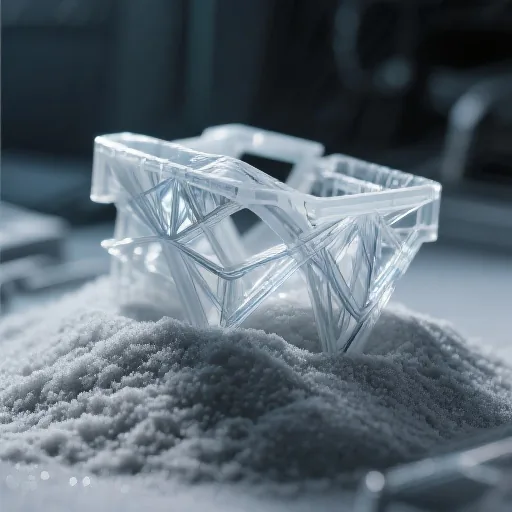
SLS environmental performance cannot be proven by one powder-reuse percentage or by the absence of separate support structures. A defensible assessment defines the functional unit and life-cycle boundary, then records grade-specific material inputs, energy, build utilization, rejected powder, failed parts, post-processing, packaging, logistics, use and end-of-life assumptions. Compare equivalent parts under the same scope and disclose uncertainty.
Life-cycle assessment (LCA) is a structured method for defining a study goal and scope, compiling inputs and outputs, assessing potential environmental impacts and interpreting results. An SLS sustainability claim is credible only within the stated functional unit, system boundary, data period and comparison method.
Why were the old recycling and carbon claims removed?
The previous article published fixed powder-reuse ratios, “zero waste,” lower-carbon PA11 and automatic transport-emission reduction without a named grade, measured inventory, geography, energy mix, comparison baseline or life-cycle boundary. Those statements were Unsupported for this website and have been removed.
ISO 14040 describes LCA principles and framework; ISO 14044 provides requirements and guidance. Neither standard supplies a default SLS result. They require the study to define what is being compared and how evidence is collected and interpreted.
What should an SLS environmental assessment compare?
Start with an equivalent function. “One printed part” and “one machined part” may not be comparable if their mass, life, performance, assembly or production quantity differs.
Define:
- Goal: internal improvement, supplier selection, customer disclosure or public claim.
- Functional unit: the function delivered for a stated period or quantity.
- System boundary: feedstock, production, finishing, packaging, transport, use and end of life as applicable.
- Geography and period: electricity, logistics and data vintage.
- Alternative: equivalent material, design, quantity, tooling and service requirement.
- Allocation and uncertainty: how shared builds, recycled content, scrap and missing data are treated.
Without these inputs, a comparison should remain an Estimated hypothesis rather than a public environmental result.
How should material and powder records be measured?
Track the actual material flow for the selected grade and period:
- virgin powder entering the process;
- recovered powder and its documented disposition;
- refresh or blending strategy permitted for the grade;
- screening, sampling and handling losses;
- powder rejected because of contamination, age or quality rules;
- material in accepted parts, rejected parts and test pieces;
- waste route and any verified recovery pathway.
ISO/ASTM 52925 addresses qualification of polymer feedstock for laser-based powder bed fusion. Use current supplier documentation and project requirements to control the powder; do not convert one machine or material practice into a universal reuse percentage.
Does SLS eliminate support waste?
The surrounding powder supports many geometries, so separate support structures are generally not part of the polymer SLS build. That is a process characteristic, not proof of zero total waste.
The selected boundary may still include unusable powder, spills, screening losses, failed builds, rejected parts, test pieces, blasting media, coatings, masking, cleaning materials and packaging. Record each relevant stream. The post-processing and inspection checklist helps identify finishing inputs that a powder-only comparison can miss.
How should energy and build utilization be recorded?
Measure energy for the defined production scope and state whether it includes warm-up, build, cooling, depowdering, finishing and facility loads. Record accepted parts in the build and explain allocation between different customer parts when builds are shared.
Build utilization can change energy and material allocation, but it does not justify a universal efficiency claim. Use the actual production record or a clearly labeled model. Keep measured data separate from estimates.
How should PA11, PA12 and filled materials be discussed?
Do not treat material-family names as environmental scores. Feedstock origin, supplier process, recycled or renewable content claims, transport, production yield, part mass, function, service life and end-of-life assumptions all affect the selected boundary.
Request grade-specific environmental documentation from the supplier. The PA12 vs PA11 guide and materials overview cover engineering selection; neither page should be used as a carbon-footprint declaration.
Can distributed manufacturing or digital inventory reduce impact?
They can be assessment scenarios, not automatic outcomes. Local production may change transport or inventory, while smaller builds, different energy, duplicated equipment, finishing or express shipping may offset the expected benefit.
Compare the real origin, destination, shipment mode, packaging, order pattern, obsolescence and production yield. Publish a reduction only when the baseline and alternative use the same functional unit and the calculation is documented.
What belongs in an evidence-ready sustainability report?
Include:
- goal, audience and claim owner;
- functional unit and equivalent comparison;
- system boundary, geography and data period;
- exact material grade and source documents;
- measured and estimated material and energy inputs;
- build utilization, rejects and powder disposition;
- finishing, packaging and transport assumptions;
- use-phase and end-of-life scope where relevant;
- allocation rules, exclusions, uncertainty and limitations;
- reviewer, revision and supporting records.
Use the end-use qualification checklist to keep performance equivalence visible. A lighter or lower-impact part is not an acceptable alternative if it does not meet the same required function.
Primary references and evidence boundary
- ISO 14040:2006: Life Cycle Assessment Principles and Framework
- ISO 14044:2006: Life Cycle Assessment Requirements and Guidelines
- ISO/ASTM 52925:2022: Qualification of Polymer Feedstock for PBF-LB
These sources support LCA structure and feedstock qualification. They do not prove a TPM3D recycling rate, carbon footprint, energy saving, waste reduction or superiority over another process. Those outcomes require a defined study and current records.
Frequently Asked Questions
Is SLS automatically more sustainable than CNC or molding?
No. The result depends on the functional unit, material, part design, build utilization, energy source, powder handling, finishing, scrap, tooling, quantity, logistics, use phase and end-of-life boundary. Compare equivalent parts and the same life-cycle scope before making an environmental claim.
What powder reuse rate should be assumed for SLS?
Do not assume a universal rate. Record the exact material grade, supplier guidance, refresh strategy, sieving and handling process, build history, rejected powder and the property checks required for the project. Publish a percentage only when its numerator, denominator, period and evidence are defined.
Does support-free SLS mean zero waste?
No. Surrounding powder can support the build without separate support structures, but the total system can still include refreshed or rejected powder, screening losses, failed parts, test coupons, cleaning media, packaging and finishing waste. Report the full selected boundary rather than only support material.
Is bio-based PA11 always the lowest-impact choice?
No. Feedstock origin is one input, not a complete life-cycle result. Compare the exact grade, supplier environmental documentation, processing, yield, energy, transport, part performance, service life and end-of-life assumptions. Do not infer a finished-part carbon result from the PA11 family name alone.
What evidence is needed for an SLS sustainability claim?
Define goal, functional unit, system boundary, geography, time period and comparison baseline. Collect grade-specific material inputs, energy, build utilization, scrap, powder disposition, finishing, packaging, transport and use or end-of-life data where relevant. State allocation rules, exclusions, uncertainty and evidence owner.
Related Case Studies
See how we have delivered results in similar projects
 Medical
Spinal Orthosis Solution
Custom 3D printed spinal braces providing personalized solutions for scoliosis patients.
 Industrial
Precision Small Parts Production
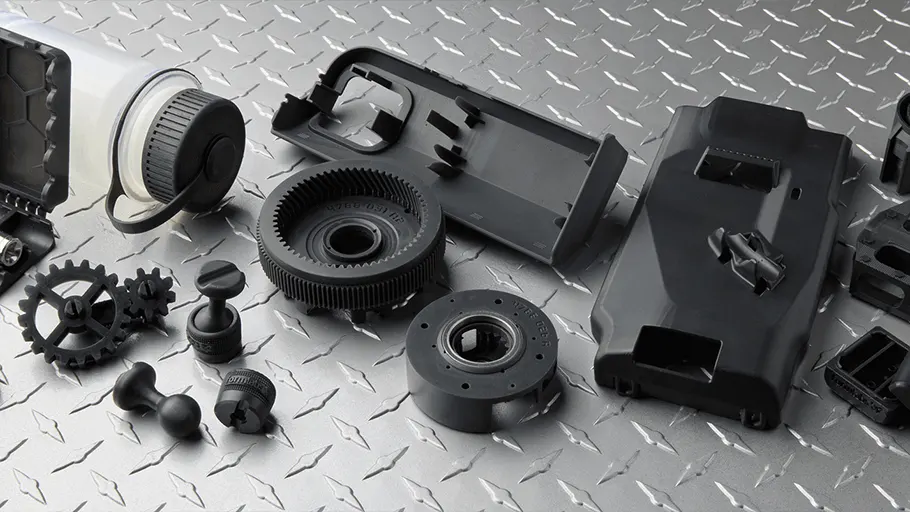
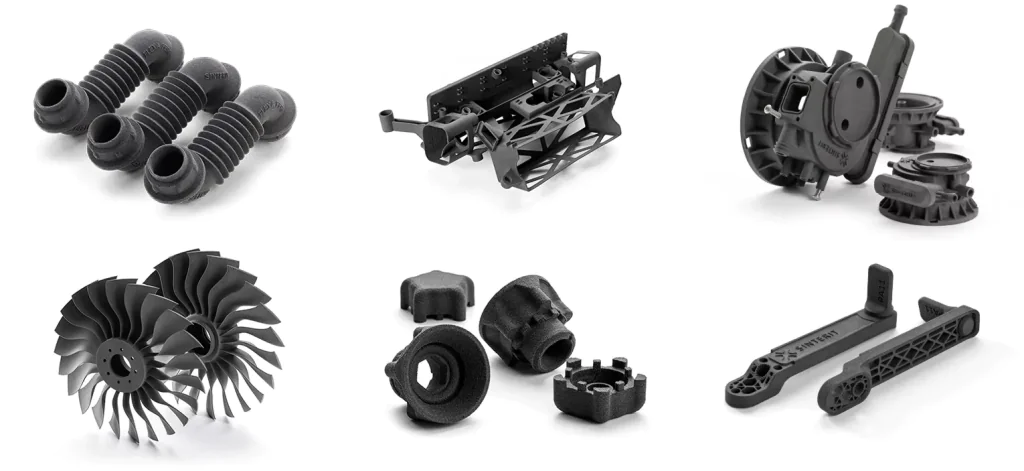
Batch production of precision small parts for multiple industry clients with complex geometries.
 Automotive
Automotive Prototype Parts
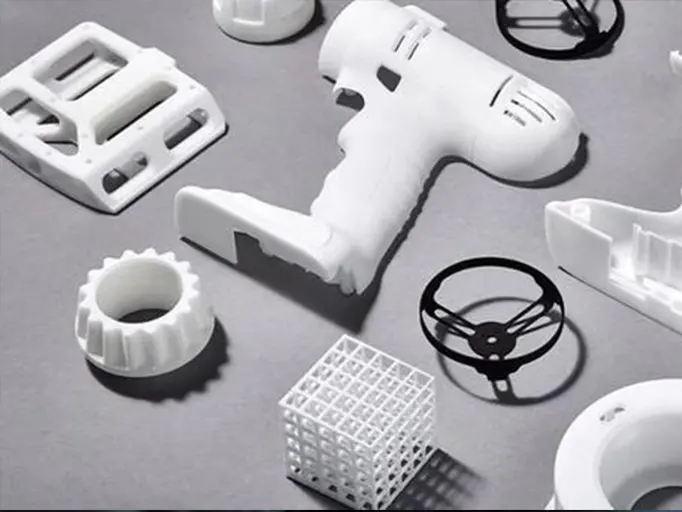
Functional automotive prototype parts for design validation and aerodynamic testing.