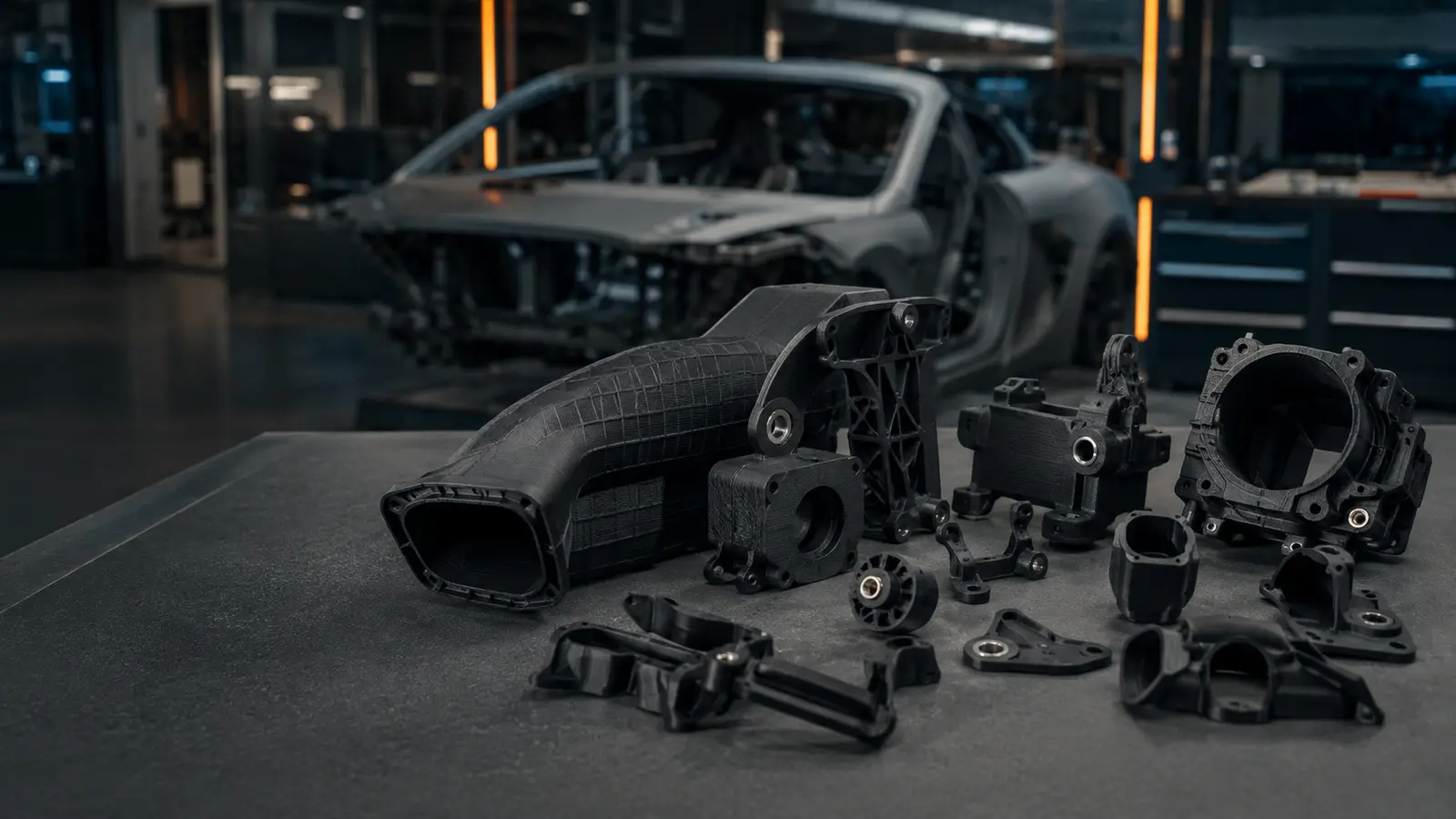
Selective laser sintering (SLS) can be evaluated for automotive nylon ducts, covers, brackets, clips, routing components, fixtures and assembly-validation parts. Suitability depends on the exact material grade, geometry, vehicle location, loads, temperature and fluid exposure, interfaces, finish, inspection and validation plan. A successful prototype does not by itself qualify the same design for vehicle or production use.
An SLS automotive nylon part is a polymer powder-bed-fusion component made for vehicle development, tooling, validation or controlled end use. Its engineering boundary includes the part definition, exact material, production route, post-processing, hardware, inspection and the environment in which it must function.
Which automotive applications are candidates for SLS review?
Common candidates include:
- air-routing ducts and non-pressure channels;
- sensor covers, housings and protective geometry;
- clips, retainers and cable-routing components;
- brackets, adapters and spacers;
- interior assembly-validation parts;
- inspection nests, jigs and prototype tooling;
- low-volume replacement concepts where requirements are fully defined.
These examples do not prove suitability. Start with the automotive application page, then classify the project as visual prototype, fit check, functional validation, vehicle trial or controlled end use. Each stage needs a different evidence package.
What must be defined before DFM?
Provide a controlled requirement set:
- Part identity: CAD, drawing, revision, units and the authoritative file.
- Function: what the part carries, locates, protects, routes, seals or retains.
- Vehicle context: installation location, mating parts, service access and failure consequence.
- Loads and motion: static or repeated loads, vibration, impact, fastener loads and assembly cycles where relevant.
- Environment: temperature, fluids, moisture, UV, dirt, cleaning and abrasion according to the project specification.
- Acceptance: critical dimensions, inspection methods, functional tests, documentation and approval owner.
If any item is unknown, label it as an open requirement instead of converting it into an assumed capability.
How should an exact nylon grade be selected?
Material-family names are screening categories. They do not establish finished-part performance or automotive approval.
| Selection question | Evidence to review | Decision boundary |
|---|---|---|
| Does the part need stiffness, ductility or impact tolerance? | Current grade TDS and relevant printed-part evidence | Compare the exact grade and test condition, not PA12 or PA11 as a family |
| Will the part see temperature, fluids, moisture or UV? | Project exposure definition and an applicable test method | A generic resistance statement does not prove the actual duration or concentration |
| Are fits, inserts or seals critical? | Drawing, mating hardware, finish route and representative assembly | Coupon properties do not qualify the assembled interface |
| Is documentation required? | Purchase specification and agreed quality plan | Traceability and reports must be quoted before production |
Use the PA12 vs PA11 evidence checklist and materials overview to prepare the shortlist. ASTM F3091/F3091M provides a requirements framework for plastic powder-bed-fusion parts, while ISO/ASTM 52924 provides a classification framework for polymer AM part properties. Neither standard certifies a TPM3D part.
How should interfaces and post-processing be controlled?
Mark datums, mounting holes, clips, sealing faces, insert locations, sensor seats and mating surfaces on the drawing. State which surfaces may be blasted, dyed, smoothed, painted or masked. Finishing can change edge definition, local dimensions, appearance and inspection access.
For repeated assembly, specify fastener and insert part numbers, installation method, torque requirement and verification plan. Use the threaded-insert guide and post-processing inspection checklist before freezing the route.
What inspection and validation should be planned?
Separate three evidence levels:
- Conformance inspection: identity, revision, material documentation, visible condition, critical dimensions, datums, hardware and finish.
- Assembly validation: fit with representative mating parts, installation sequence, access, movement, clearance and serviceability.
- Functional validation: project-defined load, vibration, impact, fluid, temperature, UV, wear or cycle testing when relevant.
Record the part revision, grade, orientation when controlled, conditioning, finish, hardware, test method, sample and acceptance result. ISO/ASTM 52901 describes information exchange and acceptance planning for purchased AM parts. Testing must still follow the customer’s applicable vehicle, component and regulatory requirements.
When does a prototype need a new approval step?
Re-review the evidence when changing:
- prototype material to production-intent grade;
- build orientation or controlled process route;
- wall, rib, clip, boss or interface geometry;
- inserts, fasteners, adhesives or coatings;
- supplier, machine family or post-processing route;
- vehicle location, load, exposure or failure consequence.
The end-use nylon qualification guide explains why a fit-check result should not be generalized beyond its tested scope.
When should SLS not be the default route?
Use another qualified process, a hybrid design or a prototype-only status when:
- loads, exposures or failure consequences are not defined;
- required grade-level or compliance evidence is unavailable;
- critical internal features cannot be cleaned or inspected;
- thermal, chemical, wear, sealing or electrical needs exceed available evidence;
- the validation plan is not representative of service;
- geometry, quantity or commercial requirements favor another mature route.
What should an automotive SLS RFQ include?
Send:
- controlled CAD, drawing, revision and units;
- part function, vehicle location and project stage;
- mating parts, datums, fits, fasteners, seals and hardware;
- loads, motion, temperature, fluids, moisture, UV and cleaning;
- exact grade or property priorities and documentation requirements;
- prototype, pilot and repeat-order quantities;
- finish, color, masking and cosmetic boundaries;
- inspection, validation and acceptance criteria;
- packaging, destination and target date.
Submit the project for DFM review so manufacturability, evidence scope, price and schedule can be confirmed for the actual order.
Primary references and evidence boundary
- ASTM F3091/F3091M: Powder Bed Fusion of Plastic Materials
- ISO/ASTM 52901: Requirements for Purchased AM Parts
- ISO/ASTM 52924:2023: Classification of Polymer AM Part Properties
These sources support requirements, property classification and acceptance planning. They do not establish automotive approval, a universal material property, tolerance, service life, production capacity or compliance status for TPM3D parts.
Frequently Asked Questions
Which automotive parts can be considered for SLS?
SLS can be considered for ducts, covers, brackets, clips, routing components, fixtures and assembly-validation parts when the geometry, load, environment, interfaces and acceptance plan are defined. Application names are only a starting point; the exact part must be reviewed before vehicle or production use.
Is PA12 automatically suitable for automotive parts?
No. PA12 is a material family, not an automotive approval. Review the exact grade, printed-part evidence, conditioning, orientation, temperature, fluids, moisture, UV, load, finish and required documentation. Use project-specific tests when the available data do not represent the final part and environment.
What automotive requirements should be included in an SLS RFQ?
Provide controlled CAD and drawings, part function, vehicle location, prototype or end-use stage, load and motion, temperature and fluid exposure, mating parts, critical dimensions, material requirements, finish, quantity, inspection, validation, packaging, destination and target date. Mark mandatory requirements separately from preferences.
Can an SLS prototype be approved directly for end use?
A successful fit or appearance prototype does not automatically qualify an end-use part. End-use approval requires the production-intent material, process and finish plus representative inspection and functional validation against agreed acceptance criteria. Any change in grade, orientation, post-processing or hardware may require review.
When should SLS not be selected for an automotive nylon part?
Keep another qualified process or a prototype-only status when loads or exposures are unknown, required documentation is unavailable, critical features cannot be inspected, failure consequences exceed the validation plan, or the geometry and quantity favor another established manufacturing route.
Related Case Studies
See how we have delivered results in similar projects
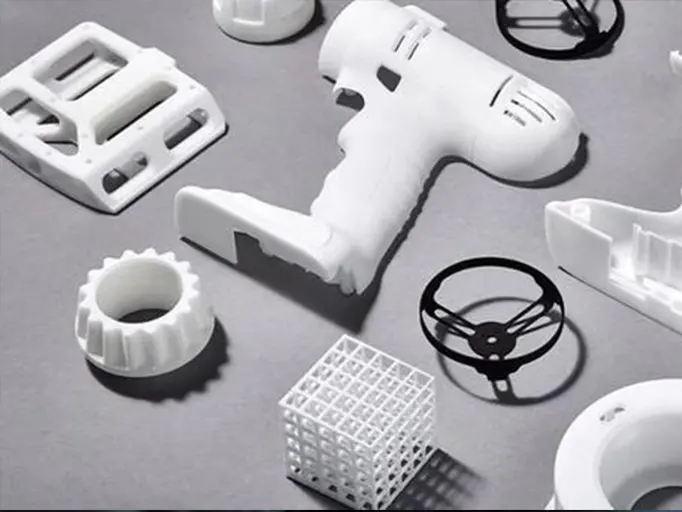 Automotive
Automotive Prototype Parts
Functional automotive prototype parts for design validation and aerodynamic testing.
 Medical
Spinal Orthosis Solution
Custom 3D printed spinal braces providing personalized solutions for scoliosis patients.
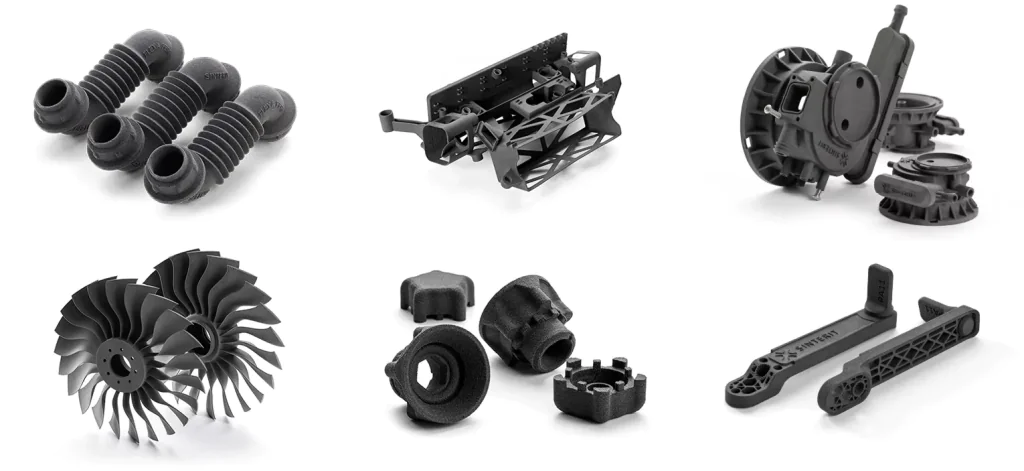 Industrial
Precision Small Parts Production
Batch production of precision small parts for multiple industry clients with complex geometries.