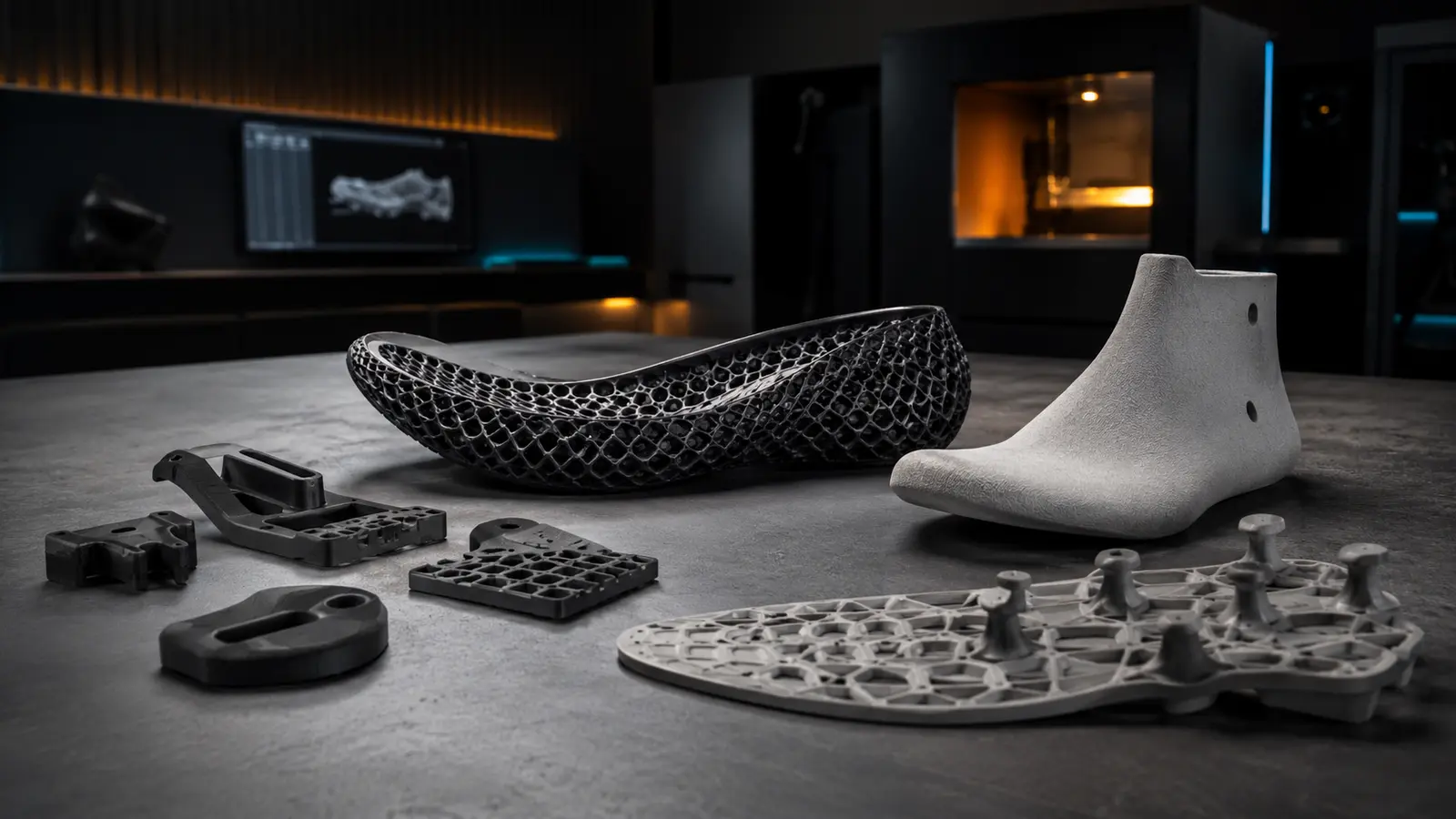
Selective laser sintering (SLS) can be used to build lattice footwear prototypes for geometry, fit, assembly, finish and project-defined testing. The lattice pattern alone does not prove cushioning, energy return, weight reduction, durability or production readiness. A useful program controls the exact material, size, interfaces, build and finishing route, then validates representative samples against written acceptance criteria.
A lattice footwear prototype is a printed sole, insert or footwear component containing a repeating open-cell geometry for a defined development question. Its evidence boundary includes the design revision, exact material grade, manufacturing route, post-processing, test method, sample condition and intended use.
What should a lattice footwear prototype answer?
Give each build a primary decision:
- Does the geometry fit the last, upper, outsole or carrier?
- Can powder be removed from the intended lattice region?
- Are bonding, fastening and transition zones accessible?
- Does the finished sample meet a defined appearance or dimensional requirement?
- Does a representative sample pass a specified bench or wear-test stage?
- Is the design ready for another prototype, not automatically for production?
Start with the footwear application page, but treat its examples as screening ideas. Record the actual objective and acceptance owner for the project.
How should the prototype stage be defined?
Separate the evidence levels:
| Prototype stage | What it can answer | What it does not prove |
|---|---|---|
| Geometry sample | Cell continuity, scale, visual direction and cleanability | Comfort, durability or production consistency |
| Fit and assembly sample | Size, interfaces, bonding access and component alignment | Long-term use or material performance |
| Functional sample | A named test under stated conditions | Performance outside the tested design and conditions |
| Production-intent trial | Repeatable route, inspection and agreed acceptance evidence | Unspecified footwear claims or regulatory approval |
The same physical sample may support more than one stage only when each method and result is documented.
What must be controlled before DFM review?
Provide a controlled requirement set:
- Part definition: authoritative 3D file, revision, units, size and left or right version.
- Lattice boundary: active region, solid skins, transition zones, openings and powder-removal paths.
- Interfaces: last, upper, outsole, carrier, inserts, adhesives and fastening features.
- Material: exact grade or property priorities plus the evidence needed to select it.
- Finish: cleaning, coloring, smoothing, coating, masking and protected surfaces.
- Validation: test method, sample condition, quantity, acceptance criteria and decision owner.
Use the SLS design checklist to mark critical features without treating a universal dimension as a production guarantee.
Does lattice geometry guarantee footwear performance?
No. Two lattices that look similar can differ in cell topology, local density, strut geometry, transitions, orientation, overall size, material and conditioning. Finished behavior also depends on interfaces and the selected test.
Do not publish cushioning, energy-return, mass-reduction, fatigue or wear results unless the baseline, sample, method, conditions and measured result are available. ISO/ASTM 52924 provides a framework for classifying polymer additive-manufacturing part properties; it does not assign a performance value to a lattice design.
How should material evidence be reviewed?
A material-family name is only a shortlist. Review:
- the exact supplier and grade;
- current TDS and applicable processing guidance;
- feedstock qualification and powder-handling requirements;
- representative printed-part data and conditioning;
- build orientation or location when controlled;
- finishing, bonding and environmental exposures;
- whether the evidence represents the final geometry and intended test.
ISO/ASTM 52925 gives guidance for qualifying polymer feedstock used in laser-based powder bed fusion. It does not certify a TPM3D material, shoe or finished part. Use the materials overview and PA12 vs PA11 checklist only to prepare questions for grade-level review.
How should interfaces and finishing be planned?
Define where the lattice becomes solid and where the component meets the upper, outsole or carrier. Mark bonding zones, alignment features, datum surfaces, visible areas and regions that must remain untreated. Cleaning or finishing can affect small openings, edge definition, appearance and local fit.
For an evidence-ready route, use the post-processing and inspection checklist. If inserts or repeated assembly are involved, also review the threaded-insert guide.
What should the validation plan record?
Record:
- design and file revision;
- exact material and available lot or batch traceability;
- manufacturing and finishing route;
- sample size and conditioning;
- test equipment, method and environment;
- baseline or comparator;
- measured result and acceptance decision;
- deviations, failures and approved changes.
ISO/ASTM 52901 describes information exchange and acceptance planning for purchased additive-manufactured parts. The customer’s applicable footwear, chemical, durability and safety requirements still govern the project.
When should SLS lattice footwear not be the default route?
Keep another process or a prototype-only status when:
- required flexibility, wear, bonding or environmental evidence is unavailable;
- powder cannot be removed or verified in the intended geometry;
- critical internal regions cannot be inspected;
- the test does not represent intended use;
- failure consequences exceed the agreed validation plan;
- quantity, tooling or commercial requirements favor another qualified route.
A visually complete sample is not evidence of production readiness.
What belongs in a lattice footwear RFQ?
Send:
- controlled files, revision, units, size and left or right version;
- component purpose and prototype stage;
- lattice and solid-region boundaries;
- mating components, bonding or fastening route;
- exact grade or property priorities;
- critical dimensions, datums and inspection method;
- finish, color, masking and appearance reference;
- test method, sample condition and acceptance criteria;
- quantity, destination and target date;
- design-ownership and confidentiality requirements.
Submit the project for DFM review so manufacturability, evidence scope, price and schedule can be confirmed for the actual order.
Primary references and evidence boundary
- ISO/ASTM 52901: Requirements for Purchased AM Parts
- ISO/ASTM 52924:2023: Classification of Polymer AM Part Properties
- ISO/ASTM 52925:2022: Polymer Feedstock Qualification
These sources support requirement definition, property classification and feedstock control. They do not establish cushioning, energy return, mass reduction, durability, production capacity, lead time, certification or footwear approval for TPM3D parts.
Frequently Asked Questions
What should a lattice footwear prototype test first?
Choose one primary objective for each prototype, such as geometry, fit, assembly, local deformation, surface finish or a defined bench test. A sample that addresses one objective should not be treated as evidence for comfort, durability or production readiness unless those outcomes were separately tested.
Does a lattice pattern guarantee cushioning or energy return?
No. Lattice appearance does not establish cushioning, energy return or durability. Results depend on the exact material, geometry, size, build route, conditioning, finishing, test method and use conditions. Define a representative test and acceptance criteria before making a performance claim.
Which material should be used for a lattice sole prototype?
Select the exact grade from the required behavior and available evidence. Review the current supplier data, printable geometry range, conditioning, orientation, finishing and representative part tests. Do not infer finished-footwear performance from a material-family name alone.
What files are needed for a lattice footwear RFQ?
Provide controlled 3D files, size and left or right version, lattice region, interfaces, target material, prototype objective, critical dimensions, finish, quantity, test plan, acceptance criteria, destination and required date. Identify the authoritative revision and any protected design data.
When should a lattice footwear design remain prototype-only?
Keep it prototype-only when the material grade is not fixed, powder removal cannot be verified, interfaces or geometry cannot be inspected, test conditions do not represent intended use, or wear, safety and durability requirements have not been agreed and validated.
Related Case Studies
See how we have delivered results in similar projects
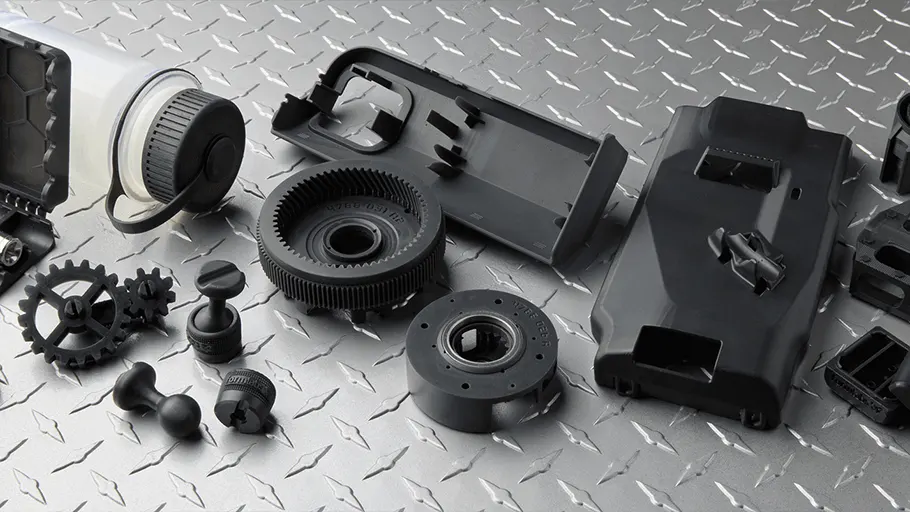 Medical
Spinal Orthosis Solution
Custom 3D printed spinal braces providing personalized solutions for scoliosis patients.
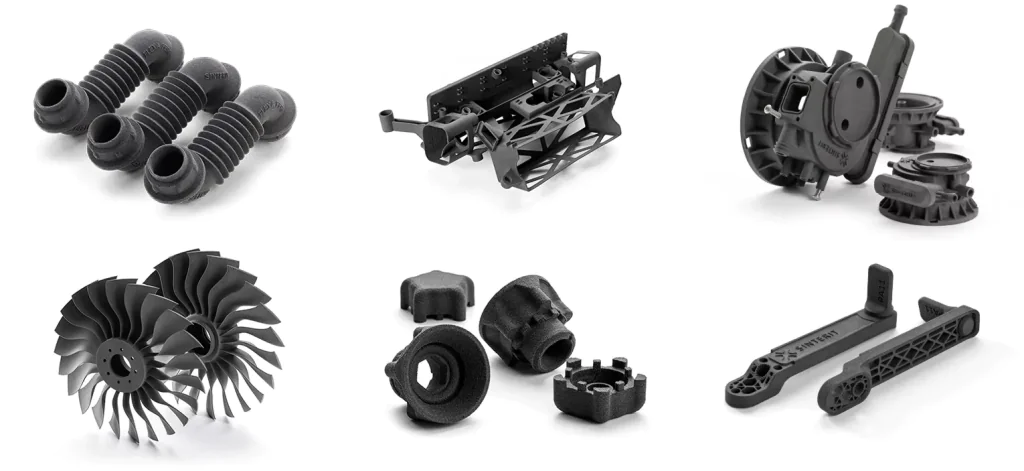 Industrial
Precision Small Parts Production
Batch production of precision small parts for multiple industry clients with complex geometries.
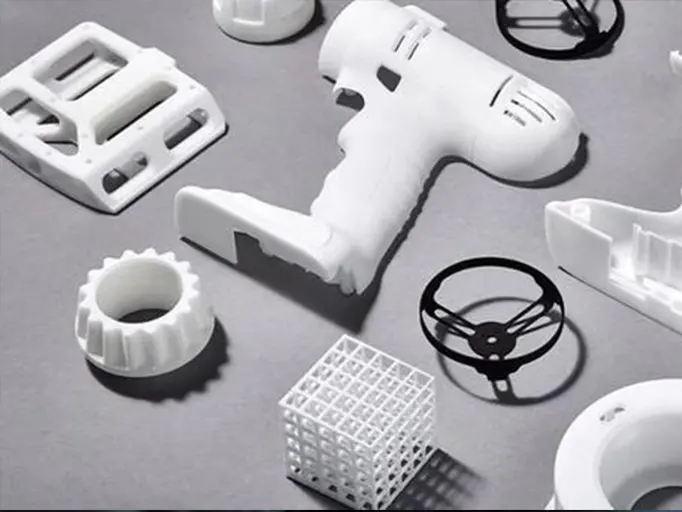 Automotive
Automotive Prototype Parts
Functional automotive prototype parts for design validation and aerodynamic testing.